
5-Axis Workholding: How Zero-Point Systems, Tombstones and Bridge Plates Reduce Setup Time
You bought a 5-axis VMC to machine five sides in a single setup. Then the floor supervisor tells you the machine is still sitting idle 40% of the day — waiting on fixtures. The spindle was never the constraint. The workholding was.
A 5-axis machine earns its premium only when parts move through it fast. That means fixtures that swap in seconds, hold repeatability to a few microns, and present all five faces without a re-clamp. This guide walks through the workholding stack that actually delivers that: a zero-point positioning interface, a tombstone (four-sided cube), and bridge plates for indexed side work — and the numbers that make the case.
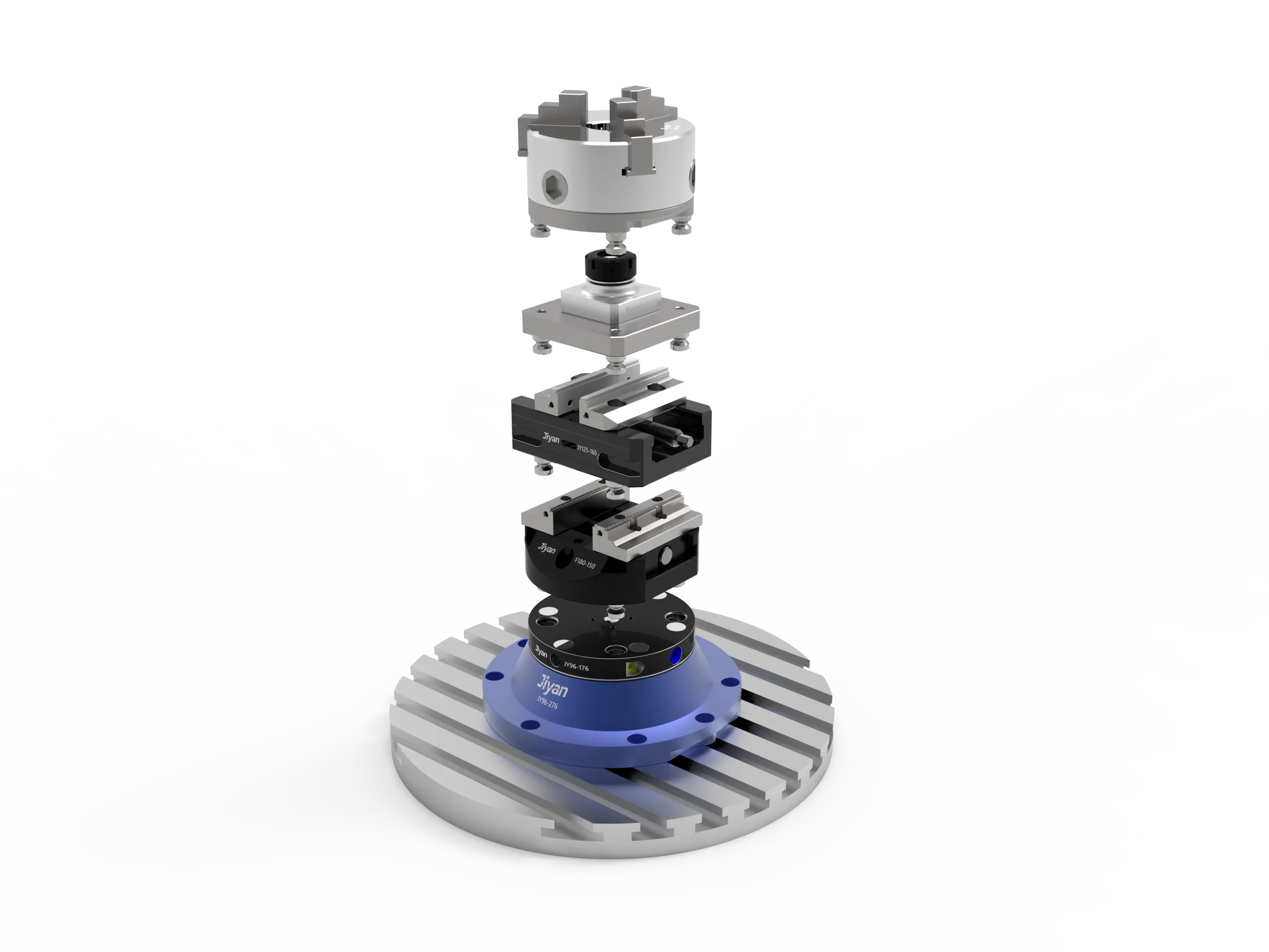
The real bottleneck on a 5-axis machine isn’t the spindle
Shops justify a 5-axis VMC on the promise of “five sides, one setup.” But the promise only pays if the next job is fixtured and indicated before the current one finishes. In most shops it isn’t:
- An operator tears down a vise, cleans the table, re-indicates a new fixture, and proves it out — 30–45 minutes per changeover.
- On a machine that cost six figures, that lost time is the most expensive minutes in the building.
- Worse, every re-indicate is a chance to introduce a datum error that scraps the part.
The fix is not a second 5-axis machine. It is a workholding system that removes indication from the critical path entirely.
What 5-axis workholding actually has to do
Five-axis workholding is harder than 3-axis workholding because the part has to be reachable from almost every angle while the fixture stays clear of the tool. A good 5-axis setup must:
- Present all five faces (or as many as possible) in one clamp, so the rotary/tilt axes do the reaching.
- Keep the fixture footprint small so the tilting table has clearance and the tool doesn’t crash the vise.
- Repeat to microns so a pallet swapped between machines or shifts still hits the same datum.
- Swap in seconds, not minutes, so spindle time isn’t spent waiting on the bench.
Three components do this job: a zero-point interface, a tombstone/cube, and bridge plates.
The zero-point + tombstone recipe
The core idea is simple. Instead of bolting a vise directly to the table, you bolt a zero-point chuck to a four-sided cube (tombstone). You mount your vises, sub-plates, and pallets on that cube. You indicate each fixture once — then the whole cube, or any pallet on it, drops onto the chuck and pulls down to the same datum every time.
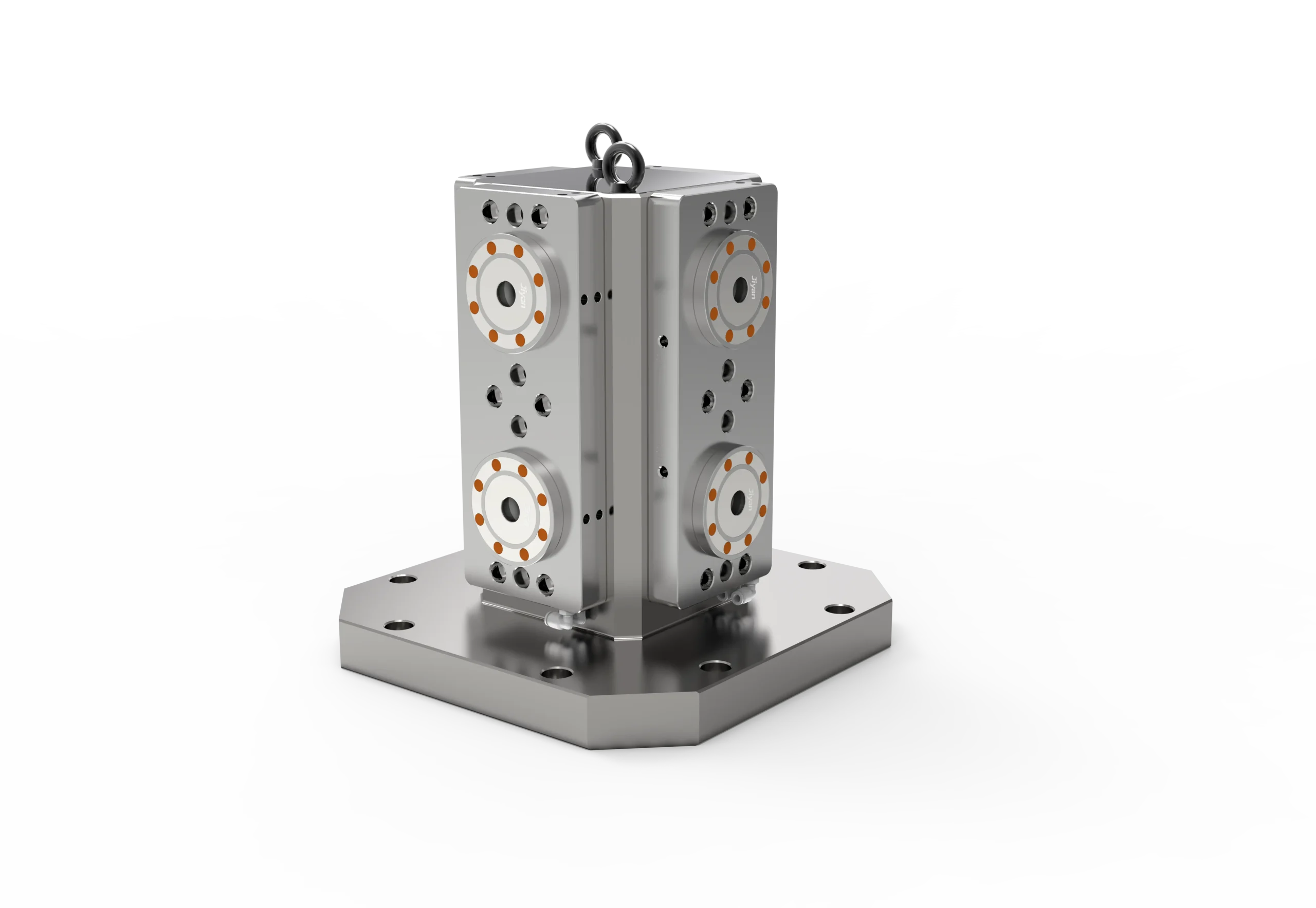
Why this wins on a 5-axis table:
- A tombstone turns one table location into four work faces. Tilt the table and you reach even more.
- Each face carries a pre-indicated fixture, so changeovers become a lift-and-drop, not a re-rig.
- The zero-point interface guarantees the same repeatability whether the cube is on machine A in the morning or machine B at night.
Component 1 — The zero-point interface
The zero-point system is the precision handshake between table and fixture. A pneumatically actuated chuck clamps a pallet against hardened locators with ±0.005 mm repeatability and pulls it down with up to 55 kN of pull force at 1.2 MPa air pressure. (JIYAN’s H18 single-hole clamps seat the pallet, blow chips clear, and self-lock on air loss — so a shop-air drop never drops a part.)
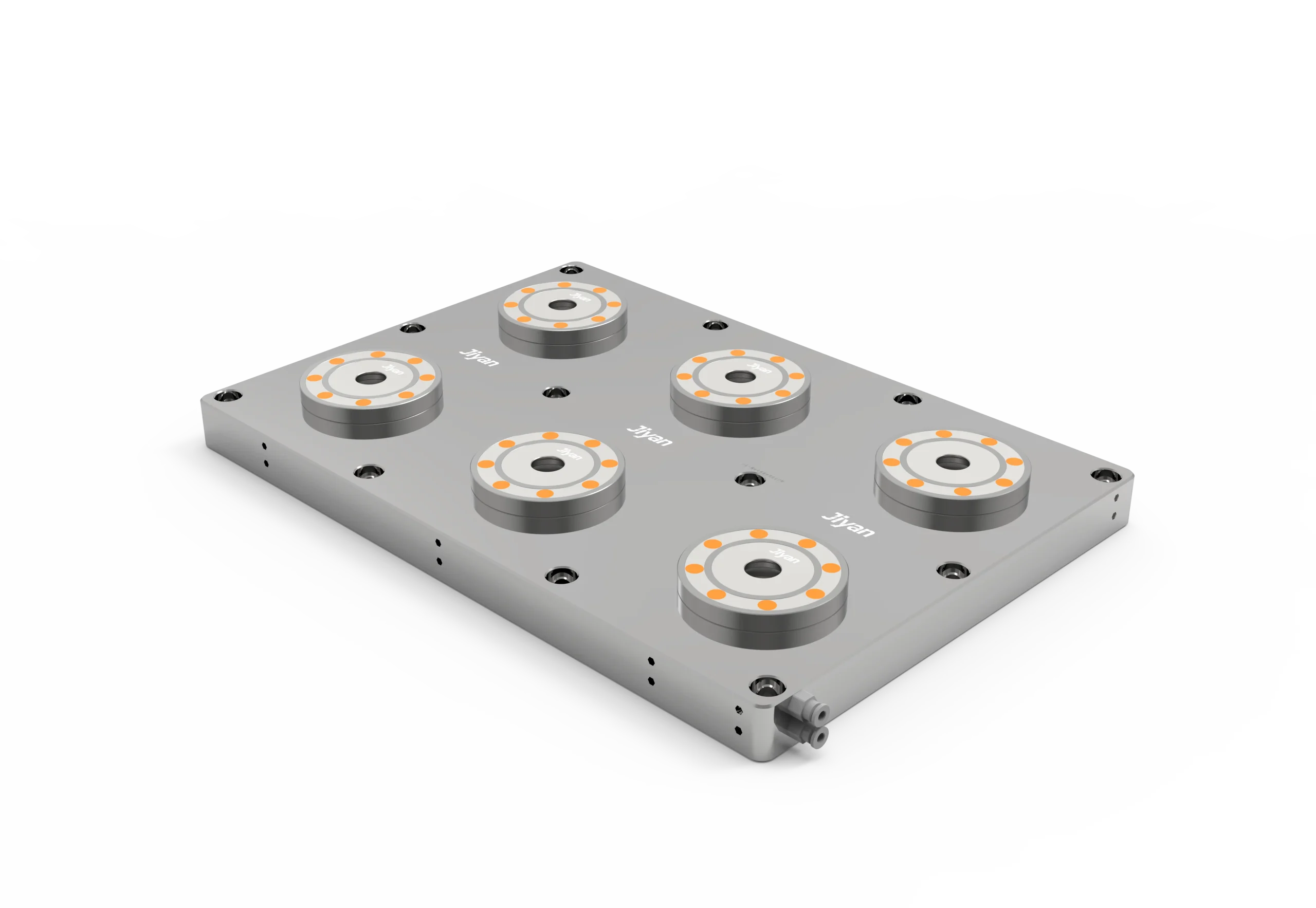
For 5-axis work, the interface choice is usually:
- H18 for standard envelopes and most job-shop work — single-hole, fast, compact.
- H138 for heavier cubes and larger tombstones where you need more pull-down and a bigger locating face.
- Cube-base variants (H138 4-station cube, 90° twin cube) when the goal is exactly the four-faced tombstone above.
Component 2 — The tombstone / four-sided cube
The tombstone is what makes “five sides, one setup” real for batch work. Mount four pre-indicated fixtures on the four faces, drop the cube onto the zero-point chuck, and the rotary/tilt table presents each face without a teardown.
Best practice:
- Standardize one cube height across the floor so any cube fits any 5-axis table.
- Pre-load faces offline — indicate fixture A while fixture B is still cutting.
- Reserve one face for a “wildcard” soft-jaw setup so a one-off doesn’t block the queue.
Component 3 — Bridge plates for indexed side work
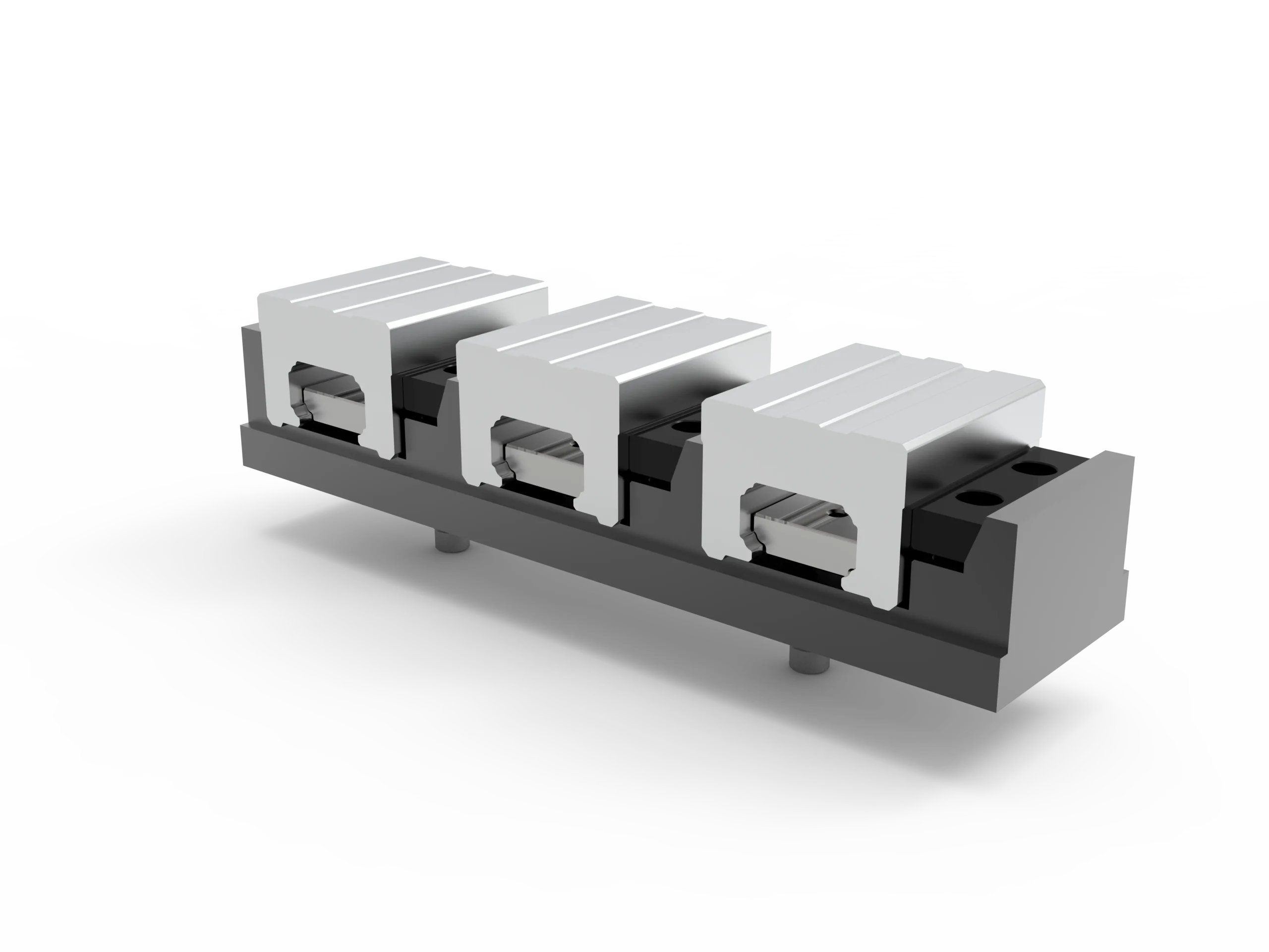
Not every part needs a full tombstone. For 4th-axis indexing or side machining, a bridge plate (L-plate) lifts a vise or fixture above the table so the tilt axis has clearance and the tool reaches the side faces.
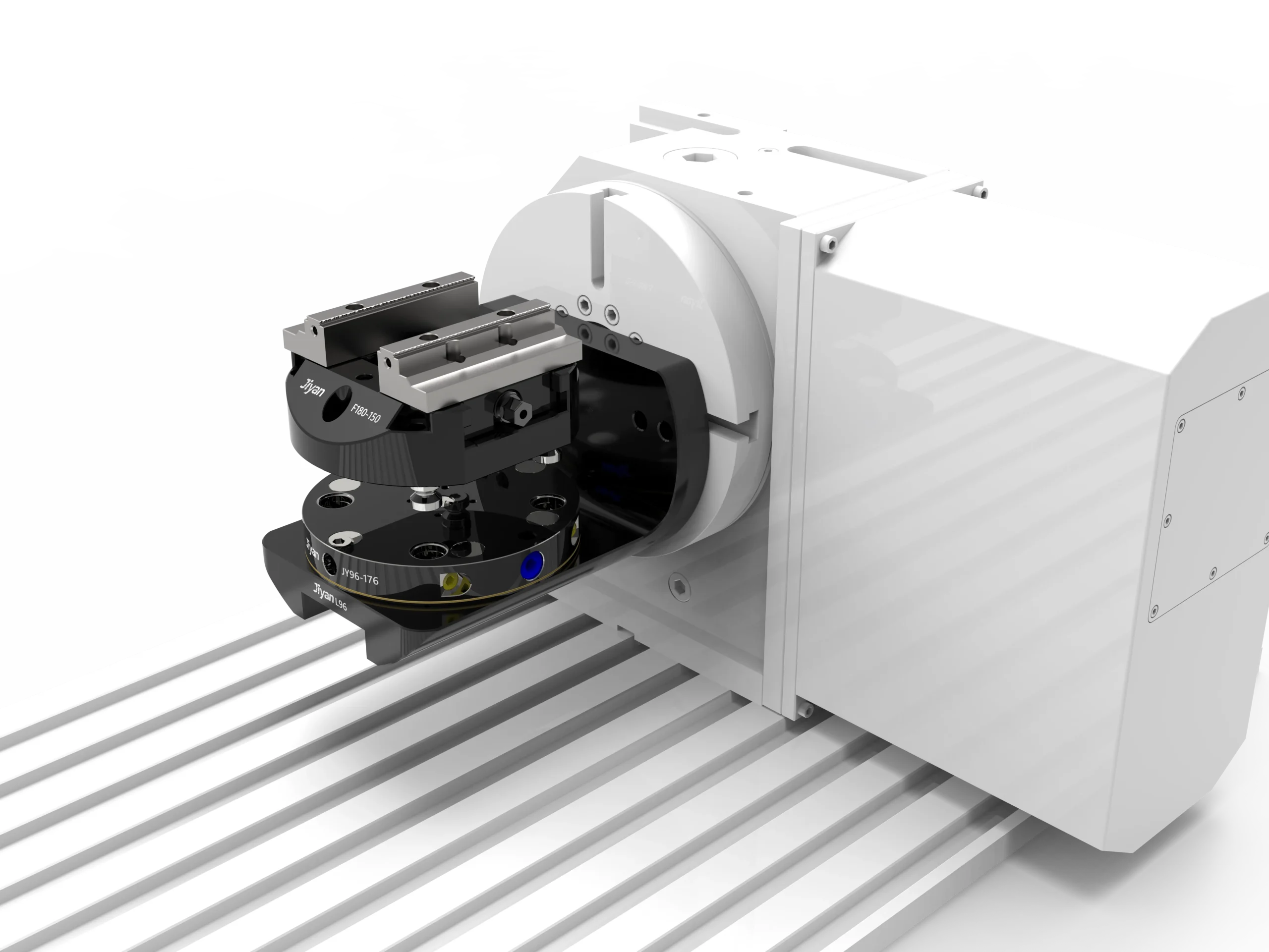
Bridge plates pay off when:
- The part is tall and would crash the table at tilt.
- You want a self-centering vise (F-series or JY-series) mounted but still able to rotate.
- You’re running a family of parts that share one sub-plate.
How a typical 5-axis setup flows
- Indicate once. Mount the vise/sub-plate on the zero-point pallet and indicate it. This is the only indication that ever happens for that fixture.
- Build the cube offline. While the machine runs, load the next fixtures onto the tombstone faces at the bench.
- Drop and pull down. When the current job finishes, lift the spent cube, drop the next, and the chuck pulls it to the same datum — under 90 seconds.
- Run five faces. Tilt and rotate; the part stays put. No re-clamp, no re-indicate.
- Swap pallets, not fixtures. For mixed short runs, swap individual pallets on the cube the same way — the benchwork never stops the spindle.
The numbers: setup time and spindle uptime
The lever is the same one we see on every shop floor — you stop paying for indication you already did:
- Changeover that took 40 minutes drops to ~90 seconds.
- A machine running 55% spindle uptime climbs toward 85–90% once setup is off the critical path.
- One 5-axis table effectively does the work of 1.4–1.6 tables on mixed, short-run work — without a second machine or a second operator.
That is the entire business case for the workholding stack. The cube, the interface, and the bridge plates are cheap next to the spindle hours they unlock.
Where shops get it wrong
- Indicating on the table. If you indicate a vise while it’s bolted to the table, every removal resets the datum. Indicate on the pallet, not the table.
- Mismatched cube heights. A cube that only fits one machine is a cube you can’t load-balanced. Standardize the height.
- Skipping offline loading. The whole point is benchwork happening while the spindle runs. If the next fixture isn’t ready, you’ve bought the hardware and kept the downtime.
- Treating zero-point as “just a quick-change.” It is a datum strategy. Use one locating standard across the floor or you fragment the gain.
When to standardize vs customize
Standardize the interface and cube height from day one — that is what compounds. Customize only the fixture on the pallet, which is where your part geometry actually differs. The mistake is the reverse: a custom interface per job and a generic fixture, which locks in the downtime you were trying to remove.
Frequently asked questions
Will a zero-point system really hold ±0.005 mm on a 5-axis table?
Yes. A single-hole pneumatic chuck seats the pallet against hardened locators and pulls it down with up to 55 kN of pull force, giving repeatability around ±0.005 mm — well inside normal 5-axis tolerances, and consistent across machines.
Do I need a tombstone, or can I just mount vises on the table?
You can mount vises directly, but you lose the multi-face advantage and you re-indicate every time you move them. A tombstone (four-sided cube) plus zero-point is what turns one table location into four pre-indicated work faces.
What’s the difference between H18 and H138 for 5-axis?
H18 covers most standard envelopes and job-shop work — compact and fast. H138 is for heavier cubes, larger tombstones, and bigger locating faces where you need more pull-down force.
Can one pallet system serve multiple 5-axis machines?
Yes, if you standardize on one zero-point datum and one cube height. That is exactly what unlocks the biggest gains on mixed, short-run work — any cube fits any machine.
Is this worth it if I only run a few 5-axis jobs a week?
The payback scales with changeover frequency, not job count. If you change fixtures more than a few times a week, the setup-time recovery usually pays for the stack in weeks, not years.
The bottom line
A 5-axis machine is a spindle-and-rotary investment. The return on it is decided at the fixture, not the control panel. A zero-point interface plus a tombstone and bridge plates removes indication from the critical path, presents five faces in one clamp, and pushes spindle uptime toward 85–90% — for a fraction of a second machine.
Want a 5-axis workholding stack sized for your table and envelope? Talk to JIYAN about H18/H138 zero-point systems, four-station cubes, and L-bridge plates built for real job-shop mixed work — and see our zero-point ROI breakdown and the second-hand CNC vs zero-point upgrade comparison to size the savings.
See how zero-point and tombstone patterns fit the whole picture in the 5-axis workholding guide.