
Skip the Second-Hand CNC — Why a Zero-Point Upgrade Adds Capacity for Less
When your shop hits a capacity wall, the instinct is to buy iron: a second-hand CNC VMC for $40k–$60k looks like the fastest way to add a shift. It usually isn't. Before you sign for a used machine, run the numbers on a zero-point positioning upgrade. In most shops, a zero-point kit recovers 30–50% of the spindle time you are already losing to setups for roughly 5–10% of a used machine's total cost — and it pays for itself in weeks, not years.
This guide compares the two paths head to head, shows the break-even math, and explains exactly when a used machine is still the right call.
The hidden cost of adding a second-hand CNC
A used VMC's sticker price is the smallest number on the invoice. The real cost lands after it shows up:
- Freight and rigging — $2,000–$5,000 to move and level a 6,000–10,000 lb machine.
- Commissioning and calibration — $1,500–$3,000 for a qualified tech, more if the ways or spindle need work.
- New workholding — a used machine arrives naked. Fixtures, vises, and sub-plates for a second machine easily run $5,000–$12,000.
- Floor space and power — you lose bay space and add three-phase load, air, and coolant capacity.
- A second operator — a machine only earns while it runs. A second shift usually means a second payroll line.
- Downtime and risk — used iron fails. A breakdown on a machine you just financed is pure negative ROI.
Add it up and a "$45,000 used VMC" is typically a $58,000–$70,000 commitment before it makes a single chip you couldn't already make.
What a zero-point upgrade actually does
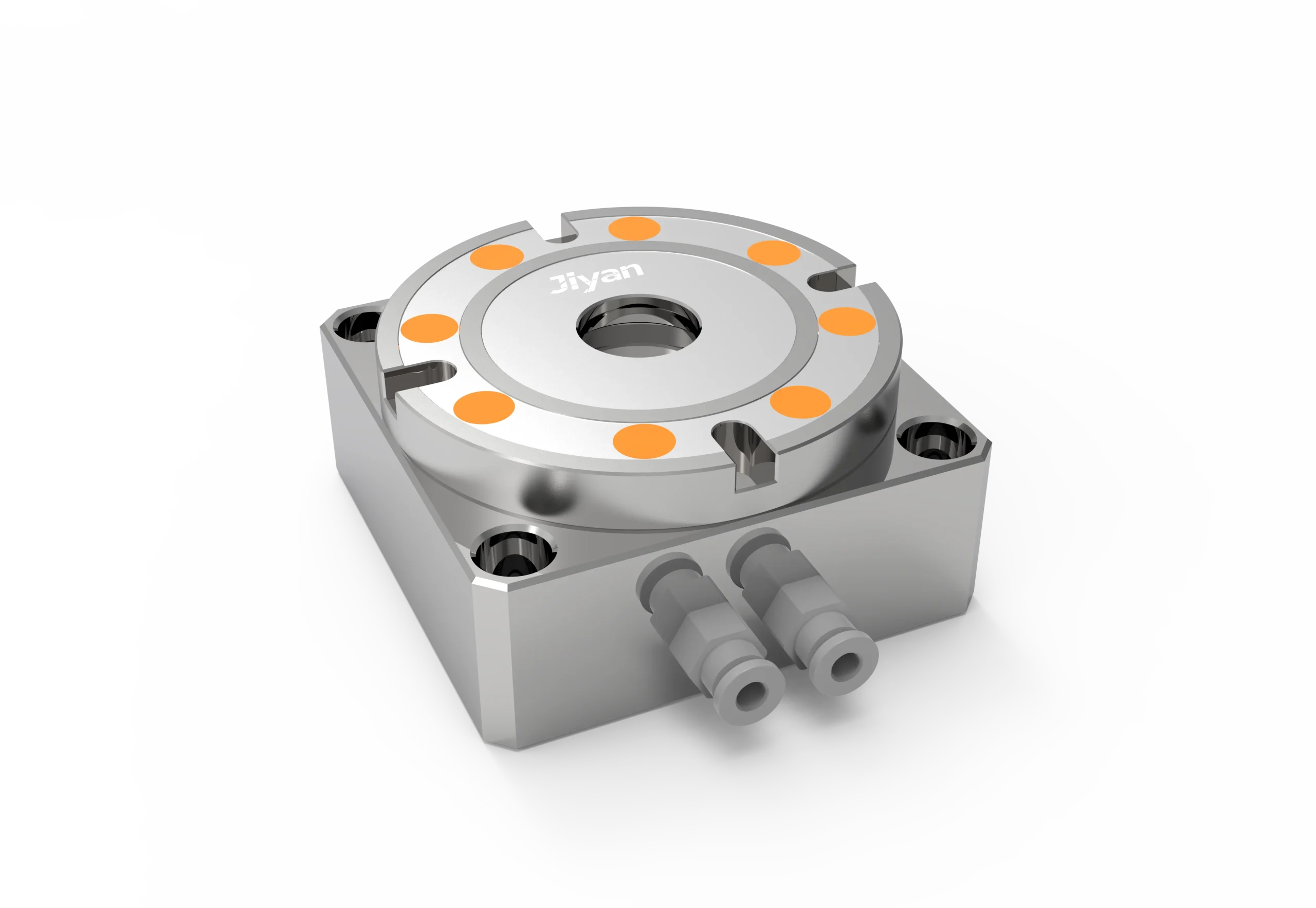
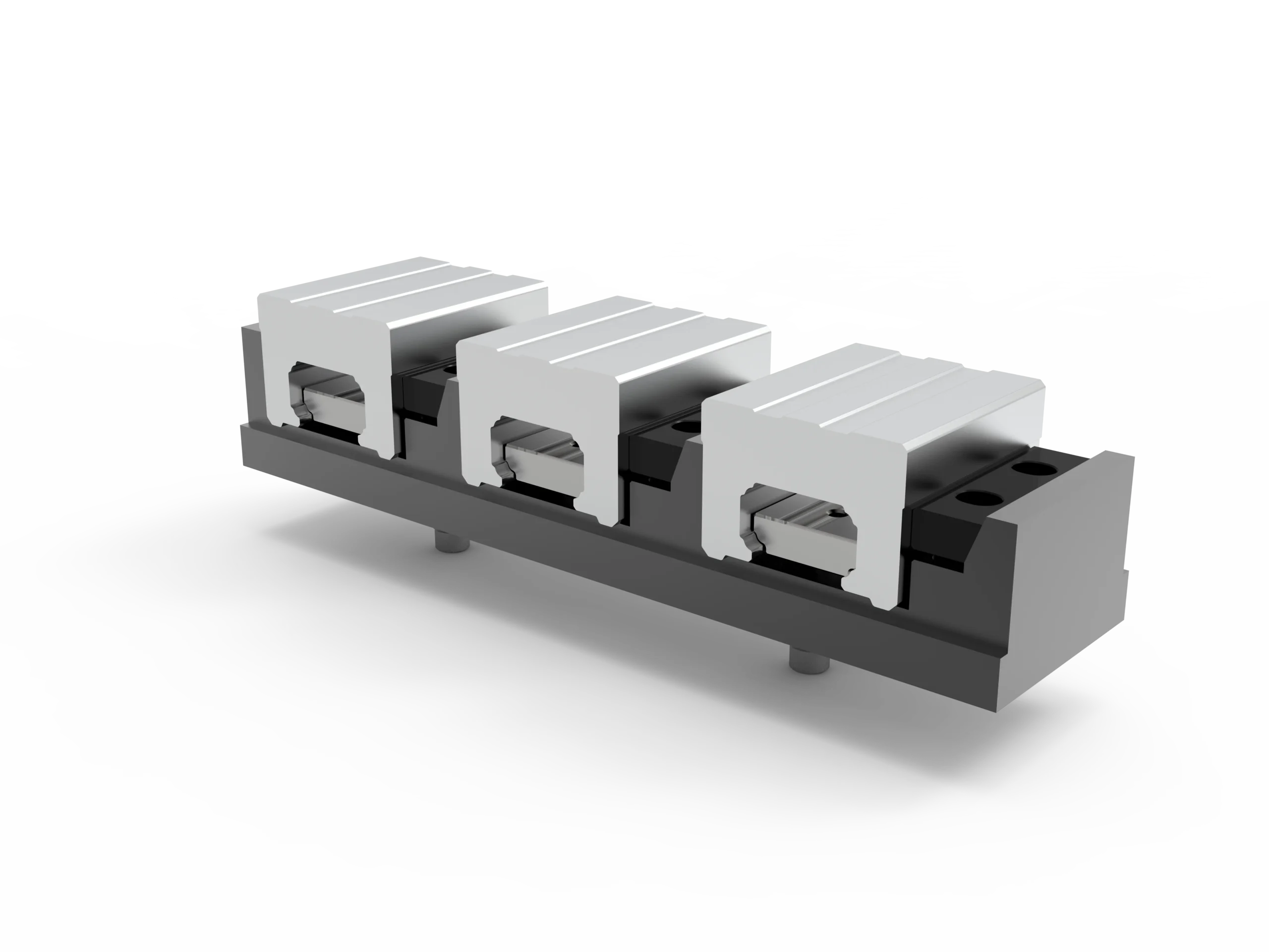
A zero-point positioning system is a pair of precision interface plates — one bolted to your machine table, one to each fixture or pallet. A pneumatically (or manually) actuated chuck clamps the pallet with ±0.005 mm repeatability and pulls it down against seated locators. The result: you indicate a fixture once, then swap it, and the next job, and the next, in seconds — no re-indicating, no tramming, no scrap from a missed offset.
The capacity you "add" is the spindle time you were throwing away:
- Setup that took 45 minutes now takes 90 seconds.
- A machine running 55% spindle uptime climbs toward 85–90% without a second operator.
- One machine effectively does the work of 1.4–1.6 machines on mixed, short-run work.
That is the same capacity gain a second machine promises — minus the freight, the bay, and the extra hire.
Used machine vs zero-point kit: a side-by-side ROI view
The table below uses representative North-American job-shop figures. Your numbers will differ; the ratio is the point.
| Cost / factor | Second-hand CNC VMC | Zero-point upgrade kit |
|---|---|---|
| Purchase / kit price | $45,000 | $3,200 |
| Freight + rigging | $3,500 | $0 |
| Commissioning | $2,000 | $0 |
| New workholding | $7,000 | included in kit |
| Extra operator (per yr) | $55,000 | $0 |
| Floor space / power | significant | negligible |
| Total first-year cost | ~$112,500 | ~$3,200 |
| Extra capacity added | ~1 shift | ~0.4–0.6 shift |
| Break-even | 18–36 months | 3–10 weeks |
A zero-point kit is not "cheaper iron." It is a different lever: instead of buying more machine hours, you stop wasting the hours you already own.
The break-even calculator
You can estimate payback in two lines.
-
Find your recoverable spindle hours.
Lost setup hours/week = number of setups/week × (current setup time − 90 sec)
Example: 40 setups/week × (40 min − 1.5 min) = 1,540 min/week ≈ 25.7 hr/week recovered. -
Value those hours at your shop rate.
At a conservative $65/hr burdened machine rate: 25.7 hr × $65 = $1,670/week in recovered capacity.
A $3,200 kit breaks even in under 2 weeks. Even at half that recovery, you are positive inside a month.
A used machine, by contrast, has to generate new billable hours equal to its ~$112k first-year cost — and it can only do that if you also buy the operator and the work to fill it.
When buying a used machine IS the right call
Be honest about the limits. A zero-point upgrade multiplies the capacity of one machine; it does not create a second one. Buy used iron when:
- You have more work than one machine can ever run, even at 90% uptime.
- You need a different process (a 5-axis head, a larger envelope, turning) that your current machine cannot perform.
- You already run lights-out or multiple shifts and are truly spindle-bound, not setup-bound.
- Floor space, power, and a second operator are already budgeted.
If your constraint is setup time, not spindle count, the upgrade wins every time. Most shops discovering they are "at capacity" are actually just at setup saturation — and that is a fixturing problem, not a machine problem.
How to upgrade your existing machine in 5 steps
- Map your setups. Count weekly changeovers and total teardown time for one week. That number is your ROI.
- Pick the interface. For VMCs, a single-hole pneumatic zero-point (JIYAN H18) covers most work; choose H138 for heavier, larger envelopes.
- Build pallets, not fresh fixtures. Mount your existing vises and fixtures on zero-point pallets so they drop in and pull down consistently.
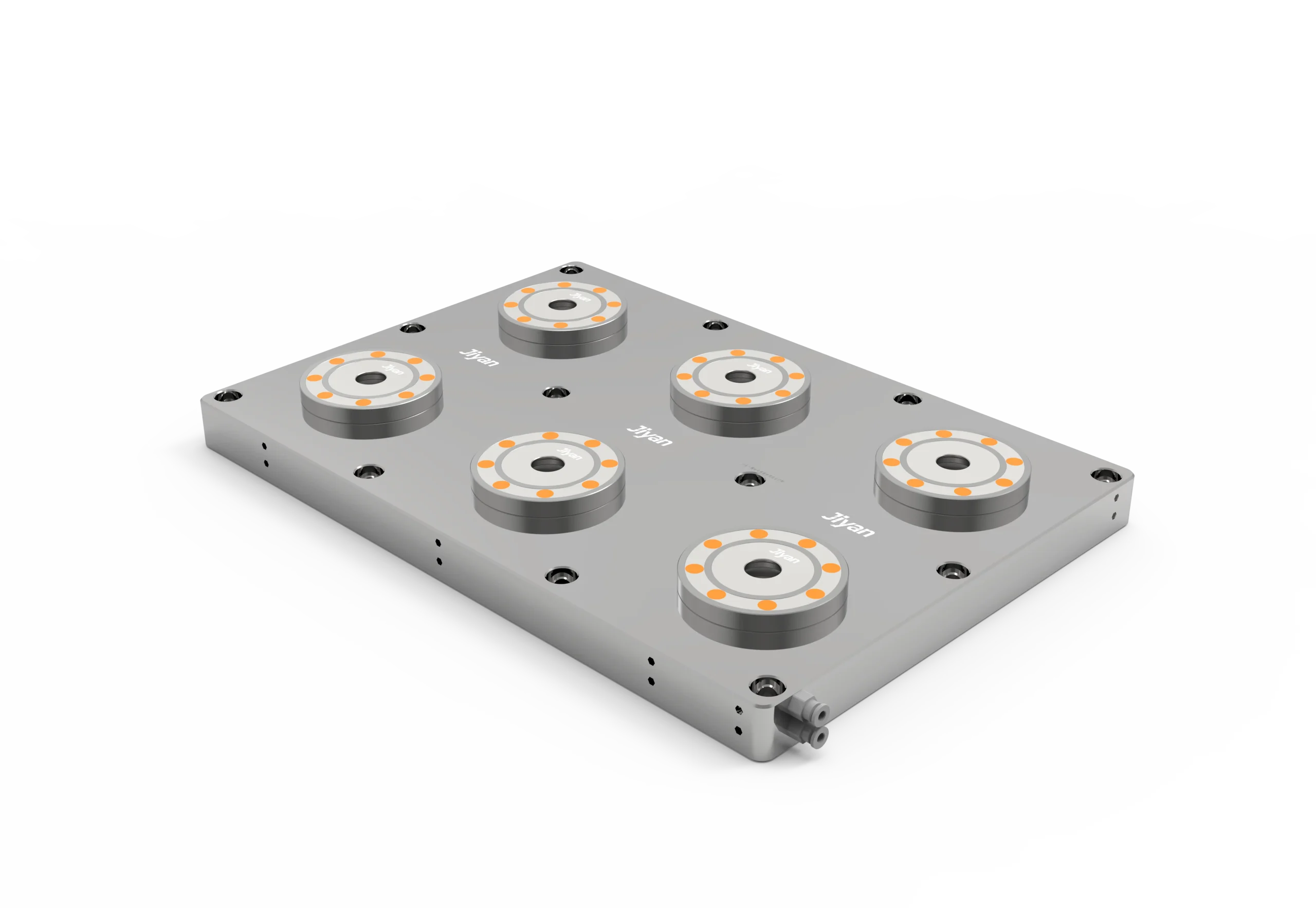
- Add a riser or sub-plate to clear tall parts and keep the table interface permanent — no re-bolting the chuck every job.
- Standardize the library. One locating datum across the floor means any pallet fits any machine.
See the full walkthrough in our zero-point clamping guide for 5-axis setups and the deeper ROI breakdown of upgrading vs. buying.
Frequently asked questions
Will a zero-point system really hold ±0.005 mm?
Yes. Pneumatic single-hole systems seat the pallet against hardened locators and pull it down with 17 kN of clamp force at up to 1.2 MPa air pressure, giving repeatability around ±0.005 mm — well inside normal machining tolerances.
Is a zero-point upgrade cheaper than a used CNC?
For setup-bound shops, yes by a wide margin: typically $3k–$5k all-in versus $55k–$70k for a commissioned used machine with workholding and an operator. Break-even is usually weeks, not years.
Do I need to change my existing fixtures?
No. You mount your current vises and fixtures on zero-point pallets. The interface plate stays on the machine table; your fixtures become swap-in modules.
What if my constraint is spindle time, not setup time?
Then a zero-point kit won't add capacity — you need more spindle hours (a second or lights-out shift). Upgrade first only when setup changeovers are what's starving your machine.
Can one pallet system serve multiple machines?
Yes. Standardizing on one locating datum across VMCs (and even 5-axis tables) lets any pallet drop into any machine, which is what unlocks the biggest gains on mixed, short-run work.
The bottom line
Before you finance a second-hand CNC, recover the hours you are already losing. A zero-point positioning upgrade delivers a large share of a second machine's capacity for a fraction of the cost, with break-even measured in weeks. Buy iron only when you are genuinely spindle-bound — not just setup-saturated.
Need help sizing a zero-point kit for your table? Talk to JIYAN about H18 and H138 systems, pallets, and risers built for real job-shop mixed work.
For the clamping mechanism behind that zero-point upgrade ROI, see the zero-point clamping system guide.