
Practical articles on fixture selection, setup optimization, and CNC efficiency — written by our engineering team.
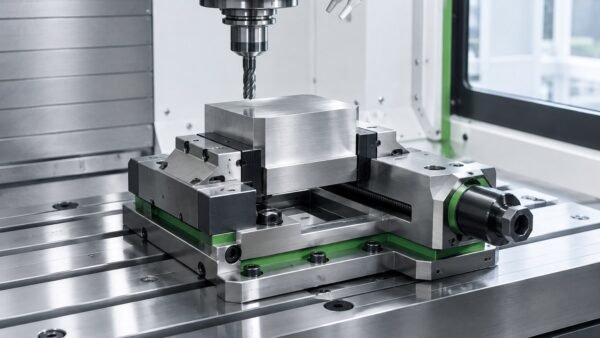
Learn how to choose the right CNC vise for your machining application. Compare vise types, jaw opening, clamping force, tool access, repeatability, and automation needs.
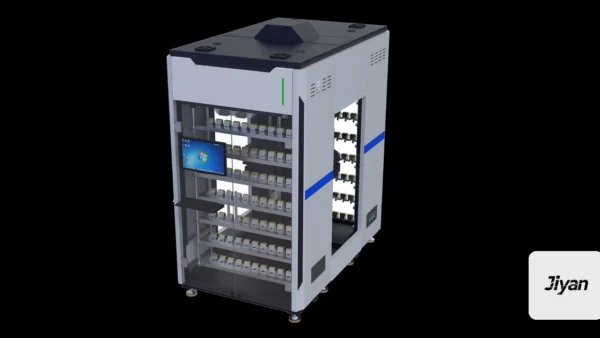
Explore a 5-axis CNC automation warehouse for automated loading, unloading and material handling across CNC machining, CMM inspection and EDM production.
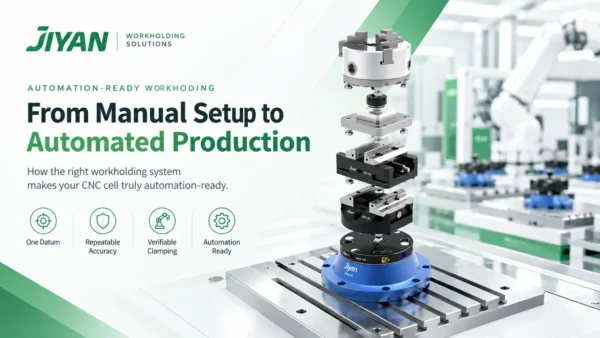
A robot is only as reliable as the fixture it loads. Learn how to design an automation-ready workholding interface — one standard datum, offline pallet setup and verifiable clamping — before you invest in robot tending.
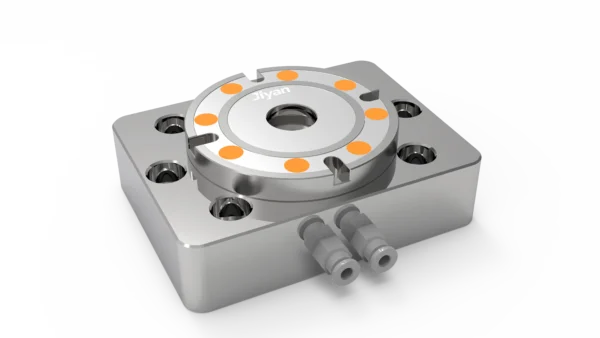
How to clamp thin-wall, delicate, and irregular parts without distortion: self-centering grip, soft jaws, feature locating, multi-station density, and zero-point fixtures for the truly awkward jobs.
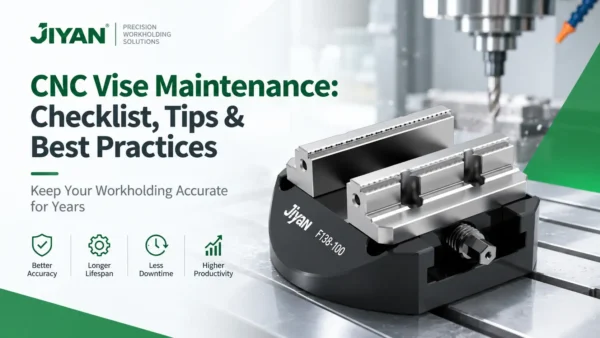
A practical CNC vise maintenance routine for self-centering pneumatic and zero-point clamping systems — daily, weekly, and monthly checks that hold repeatability in the low microns for the life of the tool.
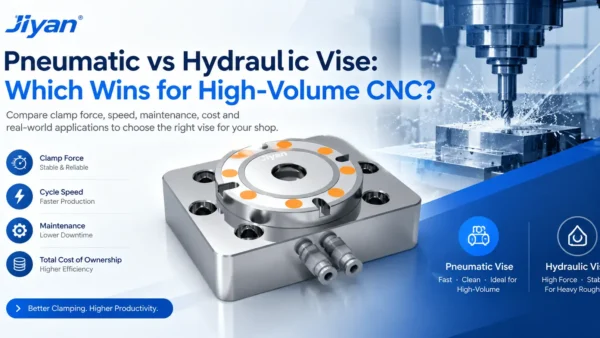
Pneumatic vs hydraulic vise — a practical comparison of clamp force, speed, heat, mess, and total cost of ownership for high-volume CNC shops deciding which workholder to standardize on.
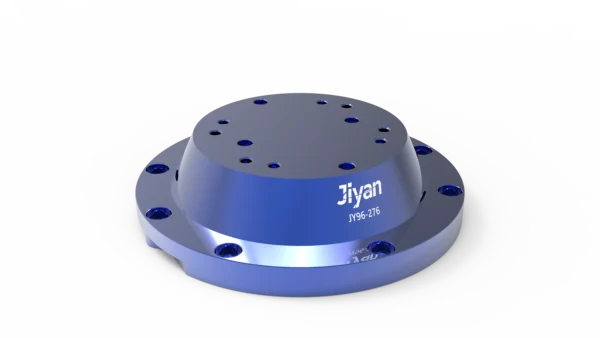
How quick-change zero-point workholding turns a 20-minute vise swap into a 30-second pallet swap — with sub-5-micron repeatability and a modular library that runs 5-axis and lights-out cells.
A CNC workholding buying guide for shops: 7 costly mistakes around repeatability, clamp force, zero-point datums, and interference — and how to buy workholding that pays for itself.
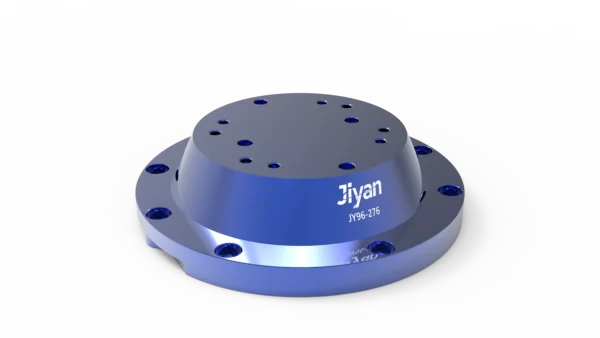
Explore practical 5-axis workholding systems, including low-profile zero-point bases, self-centering vises, and multi-station fixtures designed for reliable positioning and tool access.
A complete engineer's guide to zero-point clamping systems — how they work, sub-5-micron repeatability, how the TS96-276 base fits, and how to build a modular 5-axis or lights-out cell.