
Pneumatic Dual-Station Vise: How a 2-Station CNC Vise Doubles Your Spindle Time
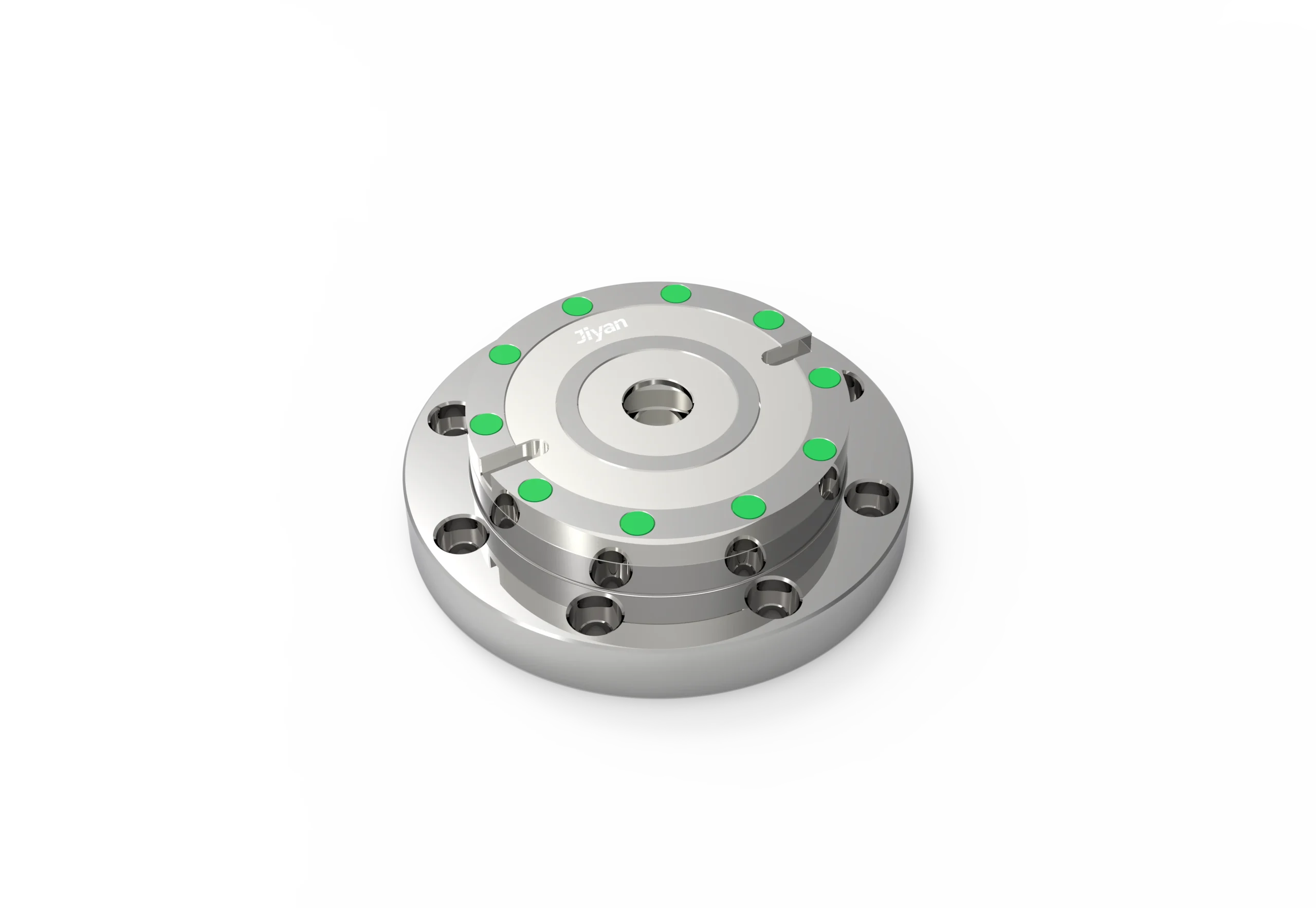
A pneumatic dual-station vise is a workholding device that holds two workpieces in two separate stations on one vise body, driven by compressed air, so that one station is cutting while the operator loads or unloads the other. Instead of stopping the machine to change a single part, you swap the finished part at station B while station A keeps cutting. The result is the same vise footprint, roughly double the productive spindle hours, and far less standing around.
If your shop runs repeat batches — same bracket, same block, same fixture every week — a 2-station CNC vise is often the single highest-return workholding upgrade you can make. This guide explains how it works, where it beats a single-station vise or a zero-point plate, how to choose one, and where JIYAN’s pneumatically actuated line fits.
What a pneumatic dual-station vise actually is
Break the name down and the design becomes obvious:
- Pneumatic — the clamping force comes from shop air (typically 0.5–0.7 MPa / 70–100 psi) through a cylinder, not from a hand crank or hydraulic pump. One push of a valve (or one M-code from the control) clamps or releases both stations at once.
- Dual-station — the vise body carries two independent work locations. Station 1 and station 2 are physically separate; clamping one does not move the other.
- Vise — each station behaves like a normal precision vise: hardened jaws, a fixed reference face, and repeatable locating.
So a pneumatic dual-station vise is, in plain terms, two air-powered vises built into one rigid base. You machine station A; while the cutter is busy, you pop the finished part out of station B, drop in the next blank, and close it. When station A finishes, the table indexes or the program swaps and station B cuts while you service A. The spindle is cutting almost the entire cycle.
Why “two stations” doubles spindle time
The math is simple, and it is the reason this product exists.
On a single-station vise, the cycle looks like this:
cut time + load/unload time + indicate time = one part, one machine stop.
If cutting takes 4 minutes and loading takes 2 minutes, you get 4 minutes of cutting per 6-minute cycle — about 67% spindle utilization. The other third, the machine is idle while a human swaps parts.
On a 2-station CNC vise, the load/unload of station B happens during the cut at station A. If both parts take 4 minutes to cut and 2 minutes to load:
station A cuts (4 min) → station B loads (overlaps, free) → station B cuts (4 min) → station A loads (overlaps, free).
You still spend 8 minutes of cutting, but the load time is hidden inside the cut time. Two parts come off in roughly 8 minutes instead of 12 — about 94% spindle utilization. Same machine, same floor space, ~50% more parts per hour.
That is the whole pitch. A pneumatic dual-station vise does not make the cutter faster; it removes the waiting. As we covered in our guide on how to reduce CNC setup time with seven proven strategies, the cheapest capacity you have is the capacity you are already paying for but not using.
How the pneumatics make it practical
Air actuation is what turns “two stations” from a clever idea into a shop-floor habit.
One action, both stations. A single valve or M-code clamps both stations simultaneously. The operator does not crank two handles. That consistency matters: hand-tightened vises drift, air-clamped vises do not, because the clamp force is set by regulator pressure, not by how hard someone pulled.
Fast cycle, less fatigue. Pneumatic close/open takes a second or two. Over a 200-part run, that is minutes saved per hour and a meaningful drop in operator fatigue — which correlates directly with fewer loading mistakes.
Safe by design. A properly plumbed pneumatic dual-station vise holds pressure if air drops (check valve) and releases in a controlled way on E-stop. There is no spring that can relax mid-cut.
Easy to automate. Because clamping is just “send air,” the vise drops neatly into a lights-out or robot-loaded cell. The robot swaps blanks at the open station while the closed station cuts. This is the natural next step after the small-shop workholding plan we wrote for shops running one or two mills.
Where a 2-station CNC vise beats the alternatives
No single workholding method wins everywhere. Here is the honest comparison.
| Method | Best when | Weak when | Spindle idle |
|---|---|---|---|
| Single-station manual vise | One-offs, heavy vary | repeat batches | high (load overlaps nothing) |
| Pneumatic dual-station vise | repeat parts, 2-up layout | very long single cuts, huge parts | very low |
| Zero-point clamping plate | many different fixtures, fast swap | single repeating part (overkill) | low (swap is fast) |
| 5-axis tombstone | 3+ sides in one setup | flat 2D repeat parts | low but costly |
The takeaway: a 2-station CNC vise is the king of the repeat-batch, two-up world. A zero-point clamping system is better when you change fixtures often; a 5-axis tombstone setup wins when you need three or more sides. They are teammates, not rivals — most mature shops run all three.
When a pneumatic dual-station vise is the wrong call
Be straight with yourself before buying.
- Very long single cuts. If one part takes 40 minutes to cut and 30 seconds to load, hiding the load buys you almost nothing. The dual-station layout just eats table space.
- Huge or awkward parts. Two stations need two parts that fit side by side. A single 600 mm plate will not.
- True one-offs. If every job is different, you spend more time setting up two stations than you save. Stick to a flexible single vise — see our complete CNC vise guide for choosing one.
- No shop air. You need a reliable compressor line at the machine. If you do not have one, a hydraulic or power-vise alternative may fit better.
Choosing a pneumatic dual-station vise: the checklist
If the part profile fits, here is what to spec:
- Jaw width and opening. Match the vise to your typical blank. Oversized jaws waste table; undersized jaws crush or slip.
- Clamp force at your air pressure. Confirm the force at 0.6 MPa, not at the catalog’s best-case 0.8 MPa. Thin aluminum needs less; hard steel grooves need more.
- Station independence. Each station should locate to its own fixed datums. If closing one shifts the other, your repeatability is gone.
- Repeatability. Look for ±0.01 mm or better on locating faces. JIYAN grinds the reference surfaces in-house, which is why our pneumatic line holds position batch after batch.
- Mounting footprint. Measure your table. A dual-station body is longer than a single; make sure two of them (or one plus a tombstone) still leave room to clear the spindle.
- Jaw options. Do you need soft jaws for a contoured part, or hard jaws for rectangles? Quick-change jaw systems pay off on mixed work.
- Air plumbing. Confirm port size, whether a check valve is built in, and how the control signal reaches the vise (manual valve vs. M-code via a solenoid).
A small-shop mini story
A job shop in Ohio ran a bracket for a local robotics integrator — 300 pieces a month, two ops, one vise. The owner told us the machine “felt busy” but the math said otherwise: 5 minutes cutting, 3 minutes loading, one part at a time. Spindle utilization was around 60%.
They moved to a pneumatic dual-station vise sized for the bracket. Station A cut while station B loaded. Within two weeks, the same cell was shipping the 300 pieces in roughly two-thirds of the previous machine hours. The owner used the freed capacity to quote a second job on the same mill. His words: “I didn’t buy a faster machine. I bought one that stops waiting.”
That is the pattern we see again and again — the setup-time problem is rarely the cutter, it is the gap around it.
How JIYAN builds pneumatic workholding
JIYAN (技研) manufactures pneumatically actuated vises at our Chang’an, Dongguan plant — machining, heat treatment, grinding, and inspection all under one roof. That vertical integration is why the locating faces on our pneumatic line hold their repeatability instead of drifting after a few hundred cycles.
For repeat-batch work, a pneumatic dual-station vise pairs naturally with two other JIYAN strengths:
- Our self-centering vises for fast, centered loading of round and rectangular blanks.
- Our zero-point bases when you need to swap the entire fixture between jobs rather than just the part.
If you want to see which pneumatic model fits your table and your typical blank, browse the workholding line or talk to our engineering team about a 2-station layout sized to your machine.
Pneumatic vs hydraulic vs manual: which actuation?
The “dual-station” layout can be built with any clamp drive. The drive you pick changes cost, force, and automation readiness.
| Drive | Force control | Speed | Automation | Best fit |
|---|---|---|---|---|
| Manual crank | by hand (varies) | slow | no | one-offs, low volume |
| Hydraulic | by pump pressure | fast, high force | yes | heavy steel, high clamp load |
| Pneumatic | by regulator (consistent) | fast | yes (M-code) | repeat batches, lights-out |
Pneumatic wins for repeat batches because the force is set once at the regulator and stays identical every cycle — no operator-dependent tightening. Hydraulic wins when you need very high force on big steel parts. Manual wins only when volume is too low to justify air. For most 2-station CNC vise work in aluminum, brass, and mid-size steel, pneumatic is the sweet spot.
A worked 2-up layout example
Say your blank is a 70 × 50 × 25 mm aluminum bracket. One single vise holds one; a pneumatic dual-station vise holds two side by side, jaw width 125 mm, total loaded length about 180 mm — still well within a 300 mm vice base.
- Cut time per part: 4 min 10 s
- Load/unload per part: 35 s
- Single vise: stations/hour ≈ 13.5 parts (cut + load, one at a time)
- Dual-station: while A cuts, B loads. Effective cycle ≈ 4:45 for two parts = ~25 parts/hour
Same machine, same operator, roughly +85% throughput on this job, with no extra floor space. Scale that across three repeat jobs a week and the vise pays for itself in well under a season — which is exactly the kind of number we use when we talk about how to reduce CNC setup time across the whole shop.
Maintenance and air care
A pneumatic dual-station vise is low maintenance, but three habits keep it accurate:
- Filter the air. Water and grit in the line wreck seals and jaws. A simple regulator-filter-lubricator (FRL) at the machine prevents most failures.
- Wipe jaws between batches. Aluminum fines pack into jaw serrations and kill repeatability. A quick brush between runs saves more than a micrometer check.
- Re-torque the base. The vise mounts to T-slots; vibration loosens bolts over weeks. A monthly check keeps both stations on their datums.
None of this is hard. The discipline is the product.
Common mistakes with dual-station setups
- Uneven clamp force. If station A is soft and station B is hard, one part chatters and the other deforms. Set the regulator once and trust it — that is the point of pneumatic.
- Forgetting the overlap. The gain only shows up if you actually load the open station during the cut. Train the operator; the habit is the upgrade.
- Poor chip control. Two stations throw chips at each other. Good coolant direction and a chip guard keep station B clean for loading.
- No fixed datum per station. Clamp one, locate both, every time. Loose setups kill the repeatability advantage.
Where dual-station fits in a growing shop
A pneumatic dual-station vise is rarely the first vise a shop buys, and it should not be the last. The typical maturity path looks like this:
- Start with a solid single self-centering vise for variety work — our self-centering vise guide covers the baseline.
- Add a dual-station once one job repeats enough that load time is stealing real capacity. This is the leverage step.
- Add zero-point bases when you outgrow single fixtures and swap whole setups between jobs — see how a zero-point clamping system works.
- Add a 5-axis tombstone when parts need three or more sides in one setup — our 5-axis workholding guide explains the layout.
A one- or two-mill shop can run steps 1 and 2 with no robot and no PLC, just shop air and a trained operator. That is why we put dual-station early in the small-shop workholding plan: it is the cheapest capacity you can buy, and it pays back in weeks.
Two-station pneumatics are one branch of the type-by-type comparison in the CNC vise guide.
FAQ
What is a pneumatic dual-station vise used for?
It is used for repeat-batch CNC machining where the same part is cut two-at-a-time. One station cuts while the other is loaded, hiding load time inside cut time and raising spindle utilization toward 90%+.
How much air pressure does a 2-station CNC vise need?
Typically 0.5–0.7 MPa (70–100 psi) of clean, regulated shop air. Confirm the actual clamp force at your operating pressure, not the catalog maximum.
Is a pneumatic dual-station vise better than a zero-point plate?
For repeating the same part two-up, yes — it hides load time and needs no fixture swap. For frequently changing fixtures, a zero-point plate is faster. Many shops use both.
Can a pneumatic dual-station vise run lights-out?
Yes. Because clamping is just “send air,” it integrates with robot loaders and M-code solenoids for unattended cells.
Does JIYAN make pneumatically actuated vises?
Yes. JIYAN builds pneumatic workholding at its Dongguan plant with in-house machining, heat treatment, grinding, and inspection, so locating faces hold repeatability over long production runs.
Build your 2-station plan
Start by timing one real repeat job: cut time vs. load time. If load time is more than 10–15% of the cycle, a pneumatic dual-station vise will almost certainly pay for itself in weeks, not years. Pair it with self-centering jaws for fast centering and you have removed both the waiting and the indicating.
Fixturing two parts where you used to fixture one starts with one vise. Talk to our engineers about a 2-station layout matched to your table and your typical blank, and you will usually see the payback on the first repeat job. Get a quote →