
How a Zero Point Clamping System Works — and Why It Can Cut Your CNC Setup Time by Up to 90%
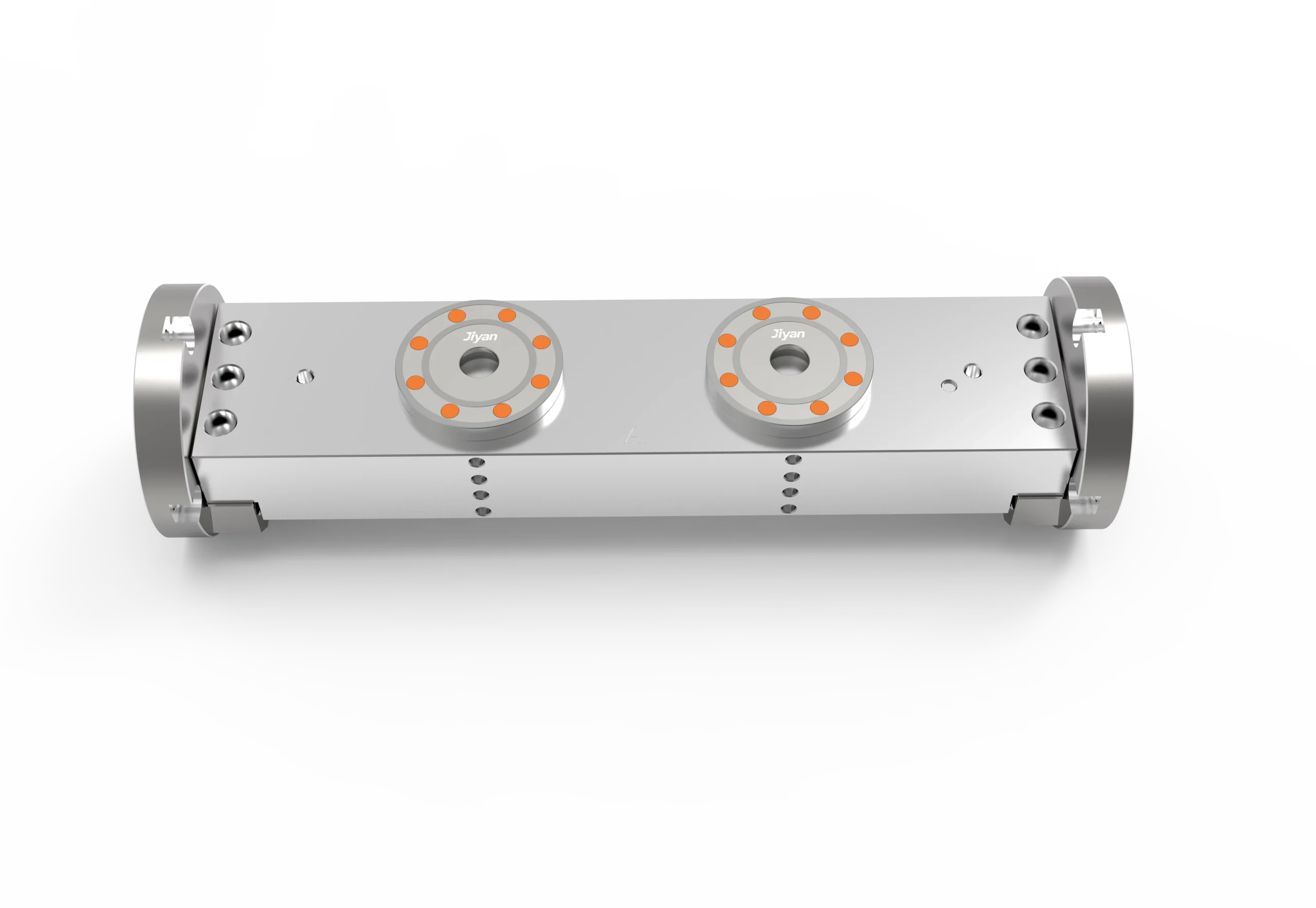
How a Zero Point Clamping System Works — and Why It Can Cut Your CNC Setup Time by Up to 90%
If you have ever spent longer indicating a fixture than actually cutting metal, a zero point clamping system is the fix you have been missing. It is the single most reliable way to reduce CNC setup time without buying a bigger machine. A zero point clamping system is a standardized workholding interface that locates and clamps vises, fixtures, or pallets in the exact same position on the machine table every single time — typically within ±0.005 mm (0.0002 in). Instead of re-indicating and re-zeroing at every job change, you drop the fixture onto a zero point plate, lock it, and start cutting.
This guide explains how a zero point clamping system works, how much setup time it really saves, where it pays off most, and what to look for when choosing a zero point clamping base for your shop. If you are evaluating workholding upgrades to win back spindle time, this is the place to start.
What Is a Zero Point Clamping System?
A zero point clamping system is a modular workholding foundation built around a single idea: one fixed, machine-independent reference point — the “zero point” — that every fixture, vise, and pallet returns to automatically.
It has two halves:
- The clamping module (receiver): a precision base plate with one or more receiving chucks, bolted to the machine table, rotary table, or tombstone.
- The pull stud (locator): a hardened reference pin mounted on the underside of your fixture, vise, or pallet.
When the stud is inserted, the module centers it and pulls it down against ground reference surfaces. The fixture is now located and clamped in one motion — no dial indicator, no edge finder, no re-zeroing.
The practical result is repeatability. Remove a fixture, put it back an hour or a week later, and it lands in the same place. Offsets you proved once stay valid, which is the foundation for faster changeovers and unattended runs.
Featured-snippet definition: A zero point clamping system is a standardized quick-change workholding interface that locks fixtures to a single repeatable datum on the machine table, eliminating manual alignment and reducing setup time by up to 90% while holding repeatability around ±0.005 mm.
How Does a Zero Point Clamping System Work?
The mechanism is simpler than it looks, and that simplicity is the point.
1. Locating
Precision-ground tapers and reference surfaces in the receiver guide the pull stud into the exact position. Because the locating features are hardened and ground, the geometry does not drift with use.
2. Clamping
An internal mechanism — mechanical, pneumatic, or hydraulic depending on the system — engages the stud and locks it. Pneumatic and hydraulic actuation let a single operator change a fixture in seconds, and they are what make robotic loading practical.
3. Repeatability
The contact surfaces and locating features are hardened and ground, so the fixture returns to the same position every time. That is why you can pull a fixture, send it to a different machine with the same system, and trust the datum.
A typical workflow looks like this:
- Prepare offline. Load parts into fixtures away from the machine while it keeps cutting the previous job.
- Swap in seconds. Remove the finished fixture, drop the next one onto the zero point plate, lock it.
- Keep offsets. Because the position is repeatable, you do not reset work offsets per job.
- Cut more. The machine spends less time waiting and more time removing material.
That last step is the whole reason shops adopt the system. Setup work stops being machine downtime and becomes parallel, productive labor.
Zero Point Clamping System vs Traditional Fixture
The difference is not “a nicer vise.” It is a different model of setup: variable manual alignment versus a fixed, standardized reference.
| Factor | Traditional fixture | Zero point clamping system |
|---|---|---|
| Alignment method | Manual indicating with dial test indicator / edge finder; operator-dependent | Automatic positioning to a fixed reference + pull-down clamp |
| Typical setup time | 30–120 min per change, varies by skill | 1–3 min per change, standardized |
| Accuracy stability | Prone to drift between setups; re-indicate after every change | Repeatable within ±0.005 mm across changes |
| Changeover | Long downtime removing and re-aligning | Rapid modular swap with offline fixturing |
| Operator dependency | High — setup quality tracks individual experience | Low — results are standardized and process-driven |
| Multi-machine transfer | Requires re-alignment and re-zeroing on each machine | Direct transfer between machines sharing the same system |
| Machine utilization | Low during setup and adjustment | High — non-cutting time minimized |
In one automotive Tier-1 project documented by a precision contractor, moving to a zero point workflow took average setup from 30 minutes to 3 minutes, held repeatability at ≤0.005 mm across 5,000 consecutive parts, and improved overall efficiency by more than 90%. The rigid pull-down force also eliminated fixture shift during aggressive roughing. Numbers like that are why zero point systems show up in aerospace, medical, and automation cells, not just in showcase shops.
How Much Setup Time Can You Actually Save?
The headline claim — up to 90% — comes from eliminating the manual steps, not from magic hardware. Traditional setups burn 15–45 minutes per job on indicating and alignment. A zero point plate turns fixture mounting into a seconds-long drop-and-lock.
Multiply that across several jobs a day:
- A shop running 4 setups a day at 30 minutes each spends 2 hours of spindle time on alignment.
- The same shop on a zero point workflow spends under 10 minutes total.
That is roughly 1.8 hours of recovered cutting time per day, per machine — often the difference between taking a job and turning it away. The savings scale with part variety: the more frequent your changeovers and the smaller your batches, the more a zero point system is worth.
Why In-House Manufacturing Matters for Zero Point Accuracy
Repeatability lives or dies on the quality of the ground reference surfaces and the heat treatment of the base and stud. That is why the source of the hardware matters.
JIYAN builds its zero point components through a fully in-house chain in Dongguan, China: CNC machining → heat treatment → precision grinding → inspection. Controlling heat treatment and grinding in-house means the locating faces hold their geometry under repeated clamping cycles instead of wearing into drift. For a datum you intend to trust for years, that vertical integration is the difference between a spec on paper and a spec on the table.
It also shortens the loop when you need a non-standard plate, stud pattern, or a base matched to an unusual table. The same plant that grinds the reference surfaces can iterate the design — useful if your workflow does not fit a catalog part. For any zero point clamping system you intend to trust for years, that vertical integration is the difference between a spec on paper and a spec on the table.
Where Zero Point Systems Pay Off Most
A zero point clamping system is not for every shop, but it is close to mandatory in a few situations:
- High-mix, low-volume production. Frequent changeovers are where manual alignment hurts most.
- 5-axis machining. Pre-set fixtures mount with confidence; complex multi-face work stops fighting the clock.
- Automation and lights-out. Predictable positioning is what lets robots load pallets without a human re-indicating.
- Multi-machine cells. One fixture set moves between machines; the datum travels with it.
- Aerospace, automotive, medical. Tight tolerances and traceability reward repeatable datums.
If you run long, single-part campaigns with one fixture parked for weeks, the payback is slower. If your table changes several times a day, it is one of the highest-return upgrades available.
Pairing a Zero Point Plate with a Self-Centering Vise
A zero point plate solves where the fixture sits on the table; a self-centering vise solves how the part sits inside it. Put them together and you get a setup that centers the stock automatically and returns to the same machine datum every time — the fastest route to done-in-one 5-axis work.
The pattern is simple: mount a self-centering vise on a zero point stud, indicate it once, and it becomes a portable, repeatable workholding module you can swap between machines in seconds. Because the vise centers the part on its own axis, CAM offsets and probing routines stay stable across batches, and operators stop fighting alignment on every load.
If you are still weighing vise styles, our self-centering vs traditional CNC vise guide breaks down when each wins, and the complete CNC vise guide covers jaw types, clamping force, and selection in depth. A zero point base is the substrate that makes either choice portable.
Choosing the Right Zero Point Clamping Base
Two industry-standard mounting patterns dominate, and your choice sets your whole workflow:
- 52 mm system — compact, ideal for smaller fixtures, vises, and dense layouts where several workpieces share one table. Common in high-density and 5-axis setups.
- 96 mm system — larger, higher clamping force, built for heavier workholding and bigger components.
Beyond the pattern, check:
- Repeatability class. Look for ≤0.005 mm (0.0002 in) locating repeatability from a reputable source.
- Clamping force. Match it to your roughest cut; pull-down force should hold through aggressive roughing without shift.
- Actuation. Manual is fine for low volume; pneumatic or hydraulic earns its keep in automation and high-frequency swaps.
- Modularity. A plate that grows into multi-plate, tombstone, and pallet setups protects the investment.
The TS96-276 Zero-Point Clamping Base
JIYAN’s TS96-276 Zero-Point Clamping Base is built around the 96 mm standard for shops that need higher clamping force and stability on larger fixtures, while keeping the same drop-and-lock simplicity. It is ground and heat-treated in-house to the ±0.005 mm repeatability class, and it pairs with standard pull studs so you can mix vises, plates, and pallets without redesigning your setup.
For smaller fixtures and dense 5-axis layouts, JIYAN also offers 52 mm-class zero point plates in the same product family — the same datum philosophy, a tighter footprint.
Step-by-Step: Switching to a Zero Point Workflow
You do not have to rebuild the whole floor on day one. A staged rollout limits risk:
- Pick one machine. Mount a zero point plate on a single mill or machining center.
- Convert your highest-churn fixture first. The fixture you indicate most often is the fastest payback.
- Prove the datum once. Indicate the first setup carefully; document the offsets.
- Standardize studs. Put matching pull studs on every fixture you plan to rotate through that plate.
- Prepare offline. Set up the next job on a bench while the machine runs.
- Measure the gain. Track setup time before and after for two weeks; the number sells the next plate internally.
Most shops find the first plate pays for itself in recovered spindle hours within a season, then expand plate-by-plate.
Common Mistakes to Avoid
- Skipping the ground reference quality. A cheap plate with soft locating faces drifts; the “zero point” stops being zero. Buy to a stated repeatability class from a source that controls grinding and heat treatment.
- Mixing incompatible stud patterns. Standardize on 52 mm or 96 mm per machine so fixtures actually interchange.
- Under-specifying clamping force. If the base shifts in roughing, you lose the very repeatability you bought.
- No offline prep area. The time savings depend on fixturing away from the machine. Without a bench, you just moved the bottleneck.
- Treating it as a vise upgrade. It is a workflow change. The win is in setup time and offsets, not in clamping a single part better.
Maintaining Your Zero Point System
Repeatability depends on keeping the locating faces clean and true:
- Clean before every seat. Chips or coolant on the stud or receiver break the datum. A quick air blast prevents false seating.
- Lubricate the actuator. Follow the schedule for pneumatic or hydraulic systems — clean, dry air or oil keeps the mechanism honest.
- Inspect reference surfaces. Check periodically for burrs or wear; ground faces should stay scratch-free.
- Torque to spec. Over-tightening a stud damages the taper and the repeatability you paid for.
Done right, a zero point plate holds its ±0.005 mm class for years of clamping cycles — which is exactly why in-house grinding and heat treatment matter as much as the initial design.
JIYAN Zero Point Products
JIYAN builds zero-point chucks and clamping cubes on two standard grids, 52 mm and 96 mm, so receivers from one family can be mixed across your pallets and every unit re-clamps to the same reference position.
| Product | Grid | Best for |
|---|---|---|
| H18 zero-point chuck | 52 mm | Compact single-station cells, smaller workpieces |
| H138 twin-cube clamp | 96 mm | Two parts per cycle on one cube |
| H138 4-station cube | 96 mm | Four-side machining batches |
| H138 6-station pallet | 96 mm | High-density 6-in-1 pallet systems |
Tell us your grid, pallet size and cycle target, and request a quote for your zero-point configuration.
FAQ
How does a zero point clamping system work?
It uses a receiver plate with precision clamping modules mounted on the machine table and hardened pull studs on your fixture. Inserting the stud auto-centers it; an internal mechanism (mechanical, pneumatic, or hydraulic) pulls it down against ground reference surfaces, locating and clamping in one motion with repeatability around ±0.005 mm.
What is the difference between a zero point clamping system and a traditional fixture?
A traditional fixture is aligned manually with indicators at every change, which is slow and operator-dependent. A zero point system replaces that with a fixed, standardized datum, so fixtures lock into the same position automatically in seconds and offsets stay valid across machines.
How much setup time does a zero point system save?
Typical shops cut setup from 30–120 minutes to 1–3 minutes per change — often a 90% reduction in non-cutting time. The saving grows with changeover frequency and part variety.
Is a zero point clamping system worth it for a small shop?
Yes, especially for high-mix work. If your table changes several times a day, recovered spindle time usually pays back the first plate within a season. Low-volume, single-fixture campaigns see slower payback.
What is the TS96-276 zero point clamping base?
It is JIYAN’s 96 mm-standard zero point clamping base, built for higher clamping force and stability on larger fixtures, ground and heat-treated in-house to ±0.005 mm repeatability, and compatible with standard pull studs across vises, plates, and pallets.
Ready to Win Back Spindle Time?
A zero point clamping system is one of the few shop upgrades that pays you back in the hours you already own — the setup time you are losing today. If you want to see how a TS96-276 base or a 52 mm plate would fit your table and fixtures, our engineers will map a staged rollout to your actual changeover mix.
Talk to JIYAN workholding engineers about a zero point setup sized to your machines, or browse the zero point product line to compare plates and studs. A zero point clamping system is not a one-time purchase so much as a permanent upgrade to how your floor uses its hours.
Cutting more and indicating less starts with one plate. Get a quote →
JIYAN designs and manufactures CNC precision workholding — CNC vises, zero point clamping systems, pneumatic dual-station vises, and modular fixtures — through a fully in-house chain of machining, heat treatment, grinding, and inspection. Built for shops that measure payoff in spindle hours.
About this guide
This article was written and reviewed by the JIYAN Workholding Engineering Team, based on in-house manufacturing experience at our ISO 9001 facility in Dongguan, China. JIYAN designs, machines, heat-treats, and inspects precision CNC vises and zero-point clamping systems for machine shops in 40+ countries. If you have a specific fixture or setup-time challenge, contact our engineers.
Also read: CNC Workholding for Small Shops: 7 Setup-Time Strategies
Also read: 5-Axis Workholding: How to Hold Parts So Your 5th Axis Actually Pays Off
Related guide: Pneumatic Dual-Station Vise: How a 2-Station CNC Vise Doubles Your Spindle Time
Related: CNC Automation Warehouse — 5-Axis Automated Loading and Unloading — recommended reading before specifying automation warehouse integration.