
Zero-Point Clamping System: The Complete Guide for CNC Shops
Zero-Point Clamping System: The Complete Guide for CNC Shops
If you run a CNC shop and still re-indicate every workpiece by hand, you are paying for your spindle to sit idle. A zero-point clamping system (sometimes called a zero-point positioning system) removes that cost: it locks a workpiece or fixture to a fixed, repeatable datum on the machine table, so the part picks up the exact same coordinate every time — within a few microns — with no probing, no shims, and no re-alignment.
This guide walks through how zero-point clamping actually works, the repeatability numbers that matter, where it beats traditional workholding, and how JIYAN's TS96-276 zero-point clamping base fits into a modular 5-axis or lights-out cell. By the end you should be able to spec a system that cuts setup time without giving up accuracy.
If your holding question is specifically "self-centering vise or traditional vise?", start with our self-centering vise vs traditional CNC vise comparison — this article covers the bigger system around the vise.
What a zero-point clamping system actually is
A zero-point clamping system is a pair of mating components that creates one shared, machine-wide datum. On one side is a base (or receiver) mounted permanently to the machine table, a rotary table, or a tombstone. On the other side is a pull stud (also called a locating pin or nipple) fixed to the bottom of your fixture, vise, or raw workpiece sub-plate.
When the stud drops into the base and the clamp engages, the workpiece is located in X, Y, and Z against the same reference face the system was originally calibrated to. From that moment, "zero" on the controller always means the same physical point on the part — no matter which machine, which tombstone, or which shift.
That sounds simple, and it is. The value is what it unlocks: you can move a fixture from a 3-axis mill to a 5-axis table, run it on a second machine while the first is busy, or swap a palletized job overnight — and the part still runs at the same coordinates.
How it works: the pull-stud interface
The mechanism is a precision locating interface. A typical zero-point base has a hardened, ground seat and a spring-loaded clamping ring. The pull stud has a ground locating diameter and a groove.
- The stud is offered up to the base and drops into the seat, locating radially and axially off ground surfaces.
- A clamping element (mechanical cam, hydraulic, or pneumatic) snaps over the stud groove and pulls it down against the reference face with several kilonewtons of clamping force.
- The stud is now both located and locked. A position sensor or mechanical flag confirms engagement so the control won't start a cycle on an unclamped stud.
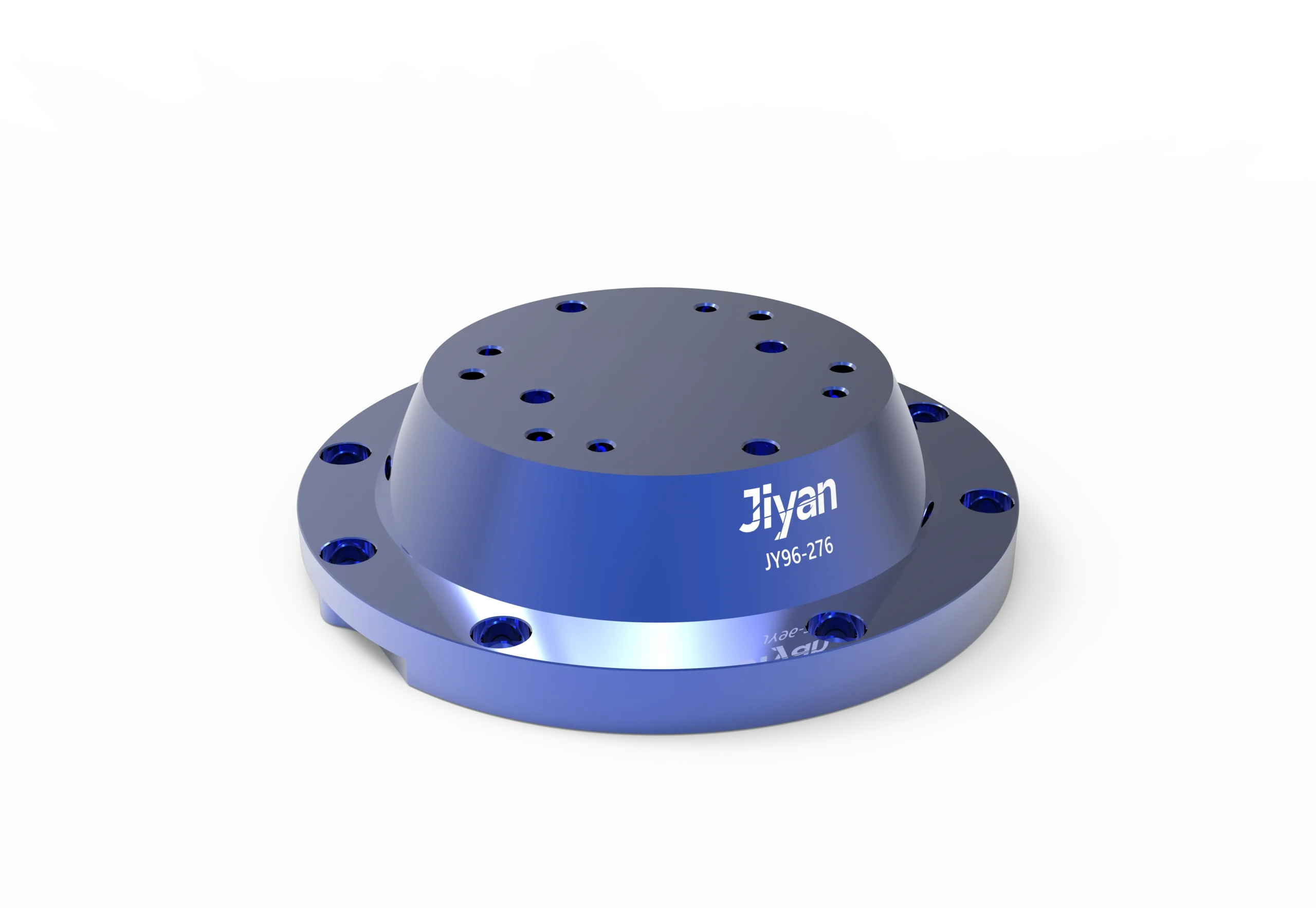
The JIYAN TS96-276 zero-point clamping base — the receiver half of a modular zero-point system.
Because the locating surfaces are ground and the clamp pulls the stud onto a fixed reference face, the part returns to the same position every time. That is the whole trick, and it is why the system is sometimes described as "powerful and foolproof" workholding.
The number that matters: repeatability under 5 microns
Spec sheets love to quote "repeatability," but what you actually care about is datum repeatability — how far the located point drifts between clamp and unclamp cycles. For a quality zero-point system this is typically:
- Radial (X/Y) repeatability: ±0.002 mm (2 microns)
- Axial (Z) repeatability: ±0.005 mm (5 microns)
- Clamping force per station: 4–25 kN depending on base size and actuation
A 2-micron radial repeatability means you can pull a fixture, re-seat it, and the feature you touched off last week is still within tolerance — no re-probe, no offset table edit. For most shops that single number is worth more than any other spec on the page, because it is what lets you trust unattended runs.
One caveat: repeatability is not the same as absolute accuracy. The system returns you to the same point; it does not magically correct a fixture that was built wrong. Your sub-plate still has to be squared and the stud pattern still has to be machined true. Zero-point clamping multiplies the quality of your fixture, it does not replace it.
Zero-point vs traditional tombstones and vises
Traditional tombstone and vise workholding is not broken — it is just slow at the one thing modern shops need most: changeover.
| Factor | Traditional vise / tombstone | Zero-point clamping system |
|---|---|---|
| Setup time per changeover | 10–40 min (indicate, shim, probe) | Under 60 sec (drop and clamp) |
| Datum repeatability | Depends on operator skill | ±2 µm radial, ±5 µm axial |
| Fixture reuse across machines | Manual re-indication each time | Same coordinates on any base |
| Lights-out readiness | Poor (needs manual setup) | Strong (palletized, sensor-verified) |
| Upfront cost | Low | Higher per base, low per stud |
| Best for | Low mix, long runs | High mix, fast changeover |
The honest take: if you run one part family all week, a good vise is fine and zero-point is overkill. The moment your mix goes up — prototype Monday, production Tuesday, fixture change at 2 a.m. — zero-point pays for itself in recovered spindle time. For the vise side of that decision, see our self-centering vs traditional vise breakdown.
TS96-276: JIYAN's zero-point clamping base
The TS96-276 is JIYAN's workhorse zero-point base: a 96 mm body pattern built for both standalone tables and integration into tombstones and pallets. It carries the locating seat, the clamping ring, and the engagement confirmation in one compact, hardened unit.
What makes it practical for a job shop:
- Standard 96 mm pattern so studs, sub-plates, and pallets are interchangeable across your cell.
- Pneumatic or manual actuation depending on whether you want automated clamp/unclamp in a pallet pool.
- High clamping force to hold heavy roughing cuts without chatter.
- Sealed seat that resists chips and coolant so repeatability holds up on a dirty floor.
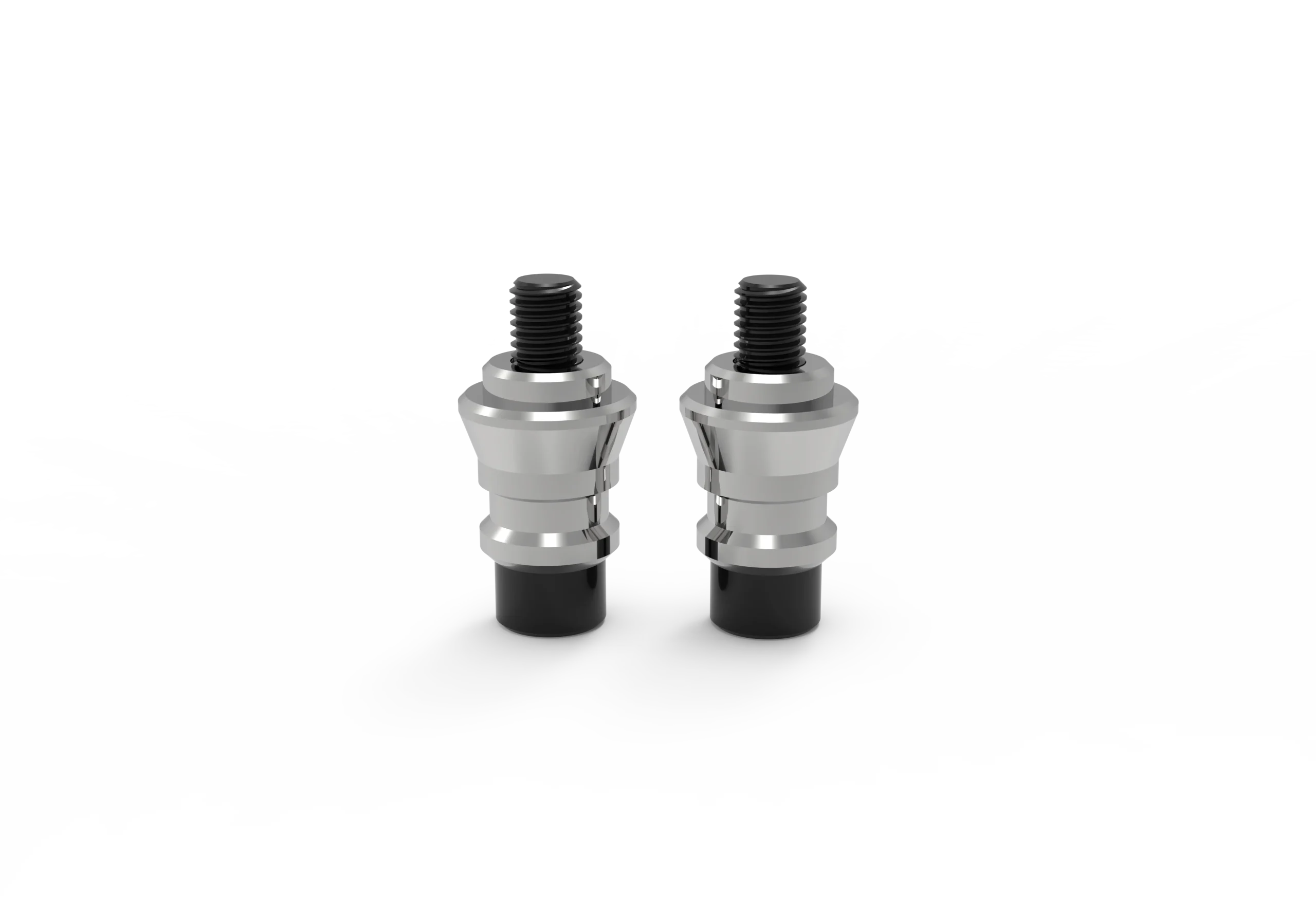
Pull studs are the mating half — one per fixture or sub-plate, machine ground for consistent datum transfer.
In a JIYAN cell the TS96-276 is the anchor: vises, angle plates, and pallets all hang off the same datum, so a fixture built for the 3-axis mill drops straight onto the 5-axis table and runs.
Pull studs and pallets: building a modular system
A zero-point system is only as flexible as the parts hanging off it. The building blocks:
- Pull studs — one per fixture base. Buy spares; they are cheap and losing one stops a job.
- Sub-plates — a ground aluminum or steel plate with studs on the bottom and your vise or clamps on top. This is what lets a vise become "zero-point native."
- Pallets — a larger plate carrying multiple studs and often multiple parts, for running a whole batch as one load.
- Tombstones — vertical fixtures with studs on the back, so you can swap an entire 4-sided job between machines.
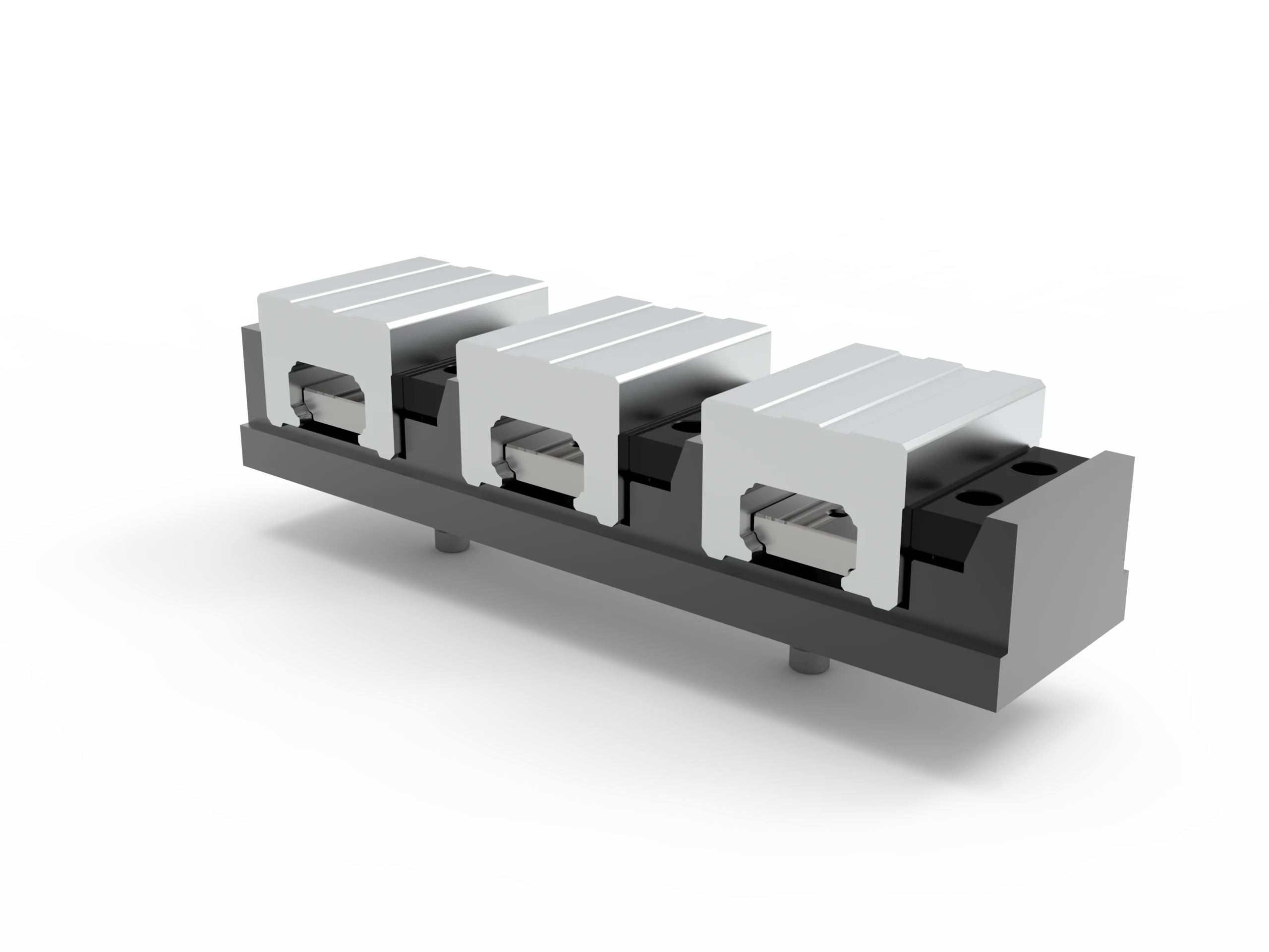
Pallets turn a zero-point base into a batch runner — load parts offline, clamp the pallet, walk away.
The modular payoff is offline setup. While the machine runs pallet A, you build pallet B at the bench. Changeover becomes "swap the pallet," not "re-indicate the vise." That is the difference between a machine that cuts metal and a machine that waits on an operator.
Where zero-point clamping shines
Zero-point earns its keep in four situations:
- 5-axis machining — you want to flip and rotate the part without re-fixturing. Zero-point lets you move the part between A-axis and C-axis setups (or between machines) and keep the datum. Our 5-axis workholding solutions guide goes deeper on this.
- High-mix, low-volume — every changeover is expensive. Drop-and-clamp kills the cost.
- Lights-out / unattended — sensor-confirmed clamping means the machine won't start on a loose stud.
- Multi-machine cells — one fixture, many machines, one coordinate system.
If none of those describe your shop, a traditional vise is honestly the cheaper answer. Zero-point is a throughput tool, not an accuracy tool — it makes good fixturing repeatable, which is where the money is.
Pairing zero-point with self-centering vises
The two technologies are not competitors; they stack. A self-centering vise centers the part automatically (great for round or irregular stock); zero-point centers the fixture on the table automatically. Put a self-centering vise on a zero-point sub-plate and you get:
- Parts that self-center in the vise (no manual positioning)
- A vise that self-locates on the table (no indication)
- Swap the whole vise between machines with the datum intact
For shops running families of similar parts, that combination removes the two slowest steps in the loop. See the self-centering vise deep dive for which vise models pair best with a sub-plate.
How to spec the right system
Before you buy studs, answer four questions:
- What pattern? 96 mm is the de-facto standard for modular cells. Match your base, studs, and pallets to one pattern.
- How many stations? Count your table real estate. A 5-axis table may take 1–4 bases; a tombstone may take 8–20.
- Actuation? Manual is fine for one-off changes; pneumatic pays off in a pallet pool running unattended.
- Clamping force? Roughing needs more than finishing. Size the base for your heaviest cut, not your average one.
A common mistake is buying one fancy base and no studs or sub-plates — you then can't actually mount anything. Budget studs and at least two sub-plates per base from day one.
Common mistakes shops make
- Skipping the sub-plate. Mounting vises directly to a base wastes the modular benefit. A ground sub-plate is what makes the vise reusable.
- Ignoring chip protection. A seat packed with swarf loses repeatability. Use sealed bases and blow out seats between changes.
- Mixing patterns. One 96 mm base and one oddball base means fixtures that don't interchange. Standardize.
- No engagement check. If the control can't tell a clamped stud from a loose one, lights-out is a crash waiting to happen. Confirm the sensor is wired in.
Our CNC workholding buying guide covers these and three more mistakes in detail.
This overview complements the zero-point clamping system guide, which breaks down the clamping mechanism itself.
FAQ
Is zero-point clamping accurate enough for finishing? Yes. ±2 µm radial repeatability is well inside typical finishing tolerance. It returns you to the same datum; your fixture quality sets the absolute accuracy.
Can I use it on a 5-axis table? Absolutely, and it is one of the best use cases — move the part between rotary setups while keeping the datum.
Do I need pneumatic actuation? Only if you want automated clamp/unclamp (pallet pools, lights-out). Manual bases are perfectly repeatable for hand-loaded changeovers.
Will it hold a heavy roughing cut? Size the base for the clamping force you need. A properly specified TS96-276 holds aggressive roughing without chatter.
Conclusion
A zero-point clamping system is the cheapest way to buy back spindle time on a high-mix floor. It does not replace a good vise or a well-built fixture — it makes them repeatable across every machine and shift. Anchor your cell on a standard pattern like the TS96-276, hang vises and pallets off the same datum, and changeover stops being the bottleneck.
Ready to build a modular cell? Talk to JIYAN about matching a TS96-276 base, pull studs, and sub-plates to your machines.