
CNC Workholding Buying Guide: 7 Costly Mistakes to Avoid
CNC Workholding Buying Guide: 7 Costly Mistakes to Avoid
Buying CNC workholding looks simple until the first scrap pile shows up. The vise that looked like a bargain chatters on roughing. The "universal" fixture won't clear the spindle at B+30. The tombstone you saved money on doesn't fit the pallet pool. This guide covers the mistakes that actually cost shops money — and how to buy workholding that pays for itself.
For the vise-specific decision, see our self-centering vs traditional vise comparison. For the system around the vise, the zero-point clamping guide and the 5-axis workholding guide go deeper.
Mistake 1: buying on price per vise, not cost per changeover
The cheapest vise is the most expensive workholding on a high-mix floor, because every changeover eats operator time. A $400 vise that takes 20 minutes to re-indicate costs more per year than a $900 self-centering vise that seats in 30 seconds — once you change it often enough.
Ask: how many changeovers per week? Multiply by operator rate by minutes saved. That number usually dwarfs the purchase price.
Mistake 2: ignoring repeatability specs
"Repeatability" on a vise means how close the jaws return to the same position cycle after cycle. For a self-centering vise this is typically ±0.01–0.02 mm; for a zero-point system it is ±0.002 mm radial. If you touch off once and run a family of parts, that spread decides whether your offsets hold.
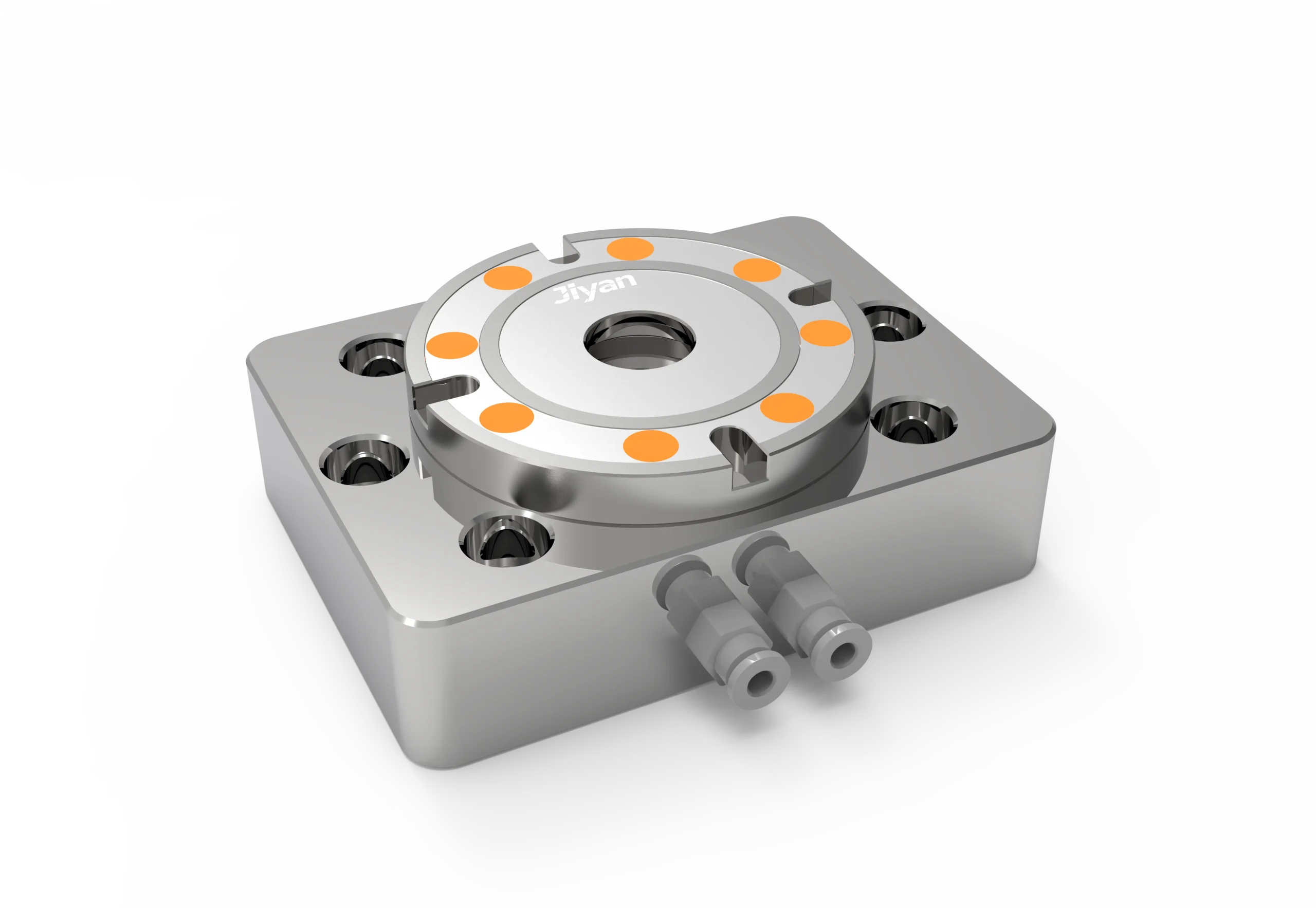
The H18-1C self-centering vise — repeatable jaw return means one touch-off serves a whole part family.
Do not buy a vise whose repeatability is wider than your tolerances. It forces re-probing every run, which is the cost you were trying to avoid.
Mistake 3: overlooking clamping force vs your roughest cut
A vise sized for finishing will chatter and mark parts the moment you rough. Check clamping force against your heaviest cut, not your average one. Self-centering pneumatic vises earn their keep here: high, even clamping force across the jaw keeps the part put through aggressive material removal.
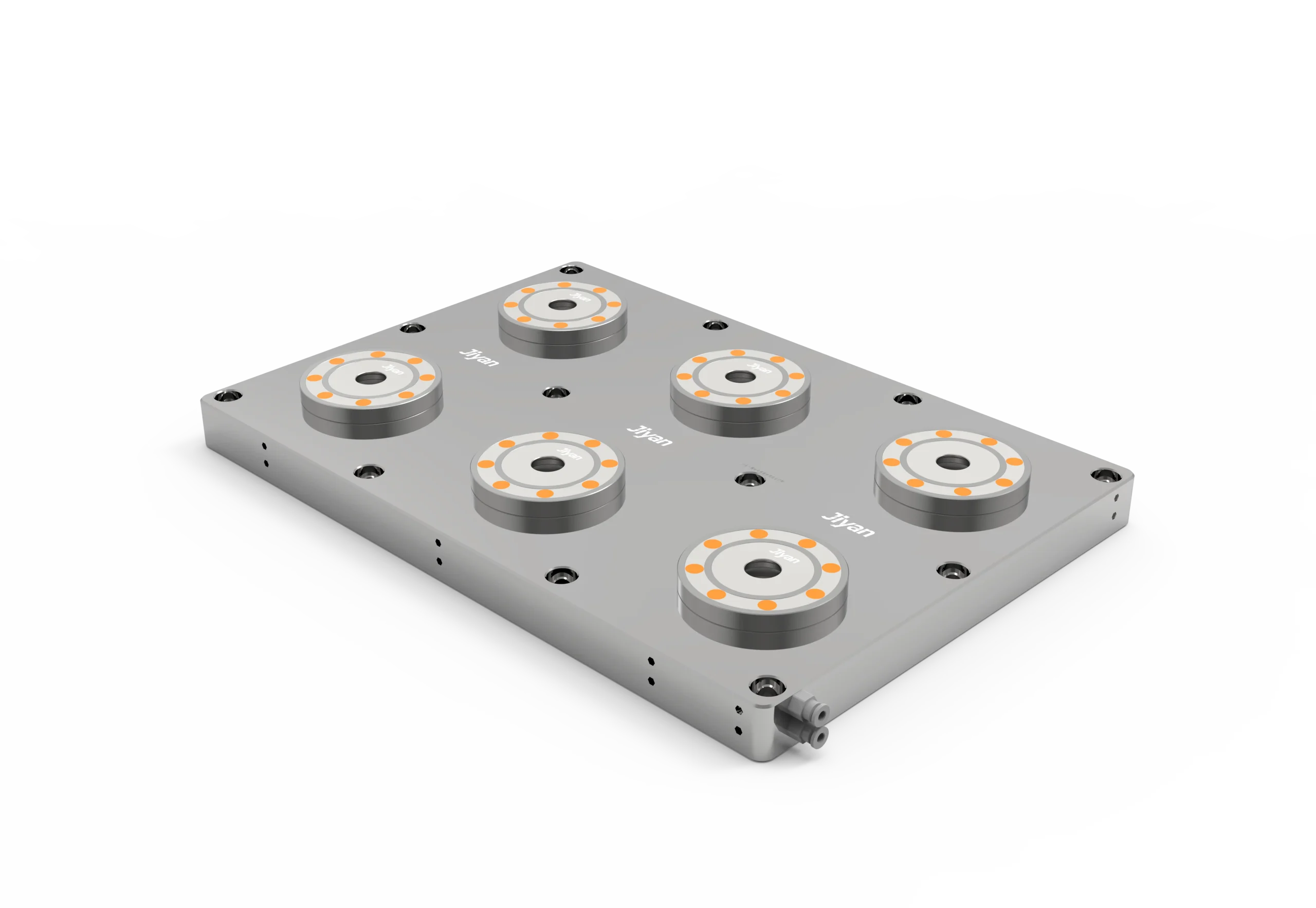
The H18-6C six-station zero-point vise — high clamp force across six stations for batch roughing.
If the spec sheet does not list clamping force, that is your answer: assume it is not enough.
Mistake 4: skipping the zero-point datum
The most under-bought item in a shop is the zero-point base. Teams buy vises and forget the base that makes the vise reusable across machines. Without a zero-point datum, every move to a second machine is a fresh indication — and a fresh chance to drift.
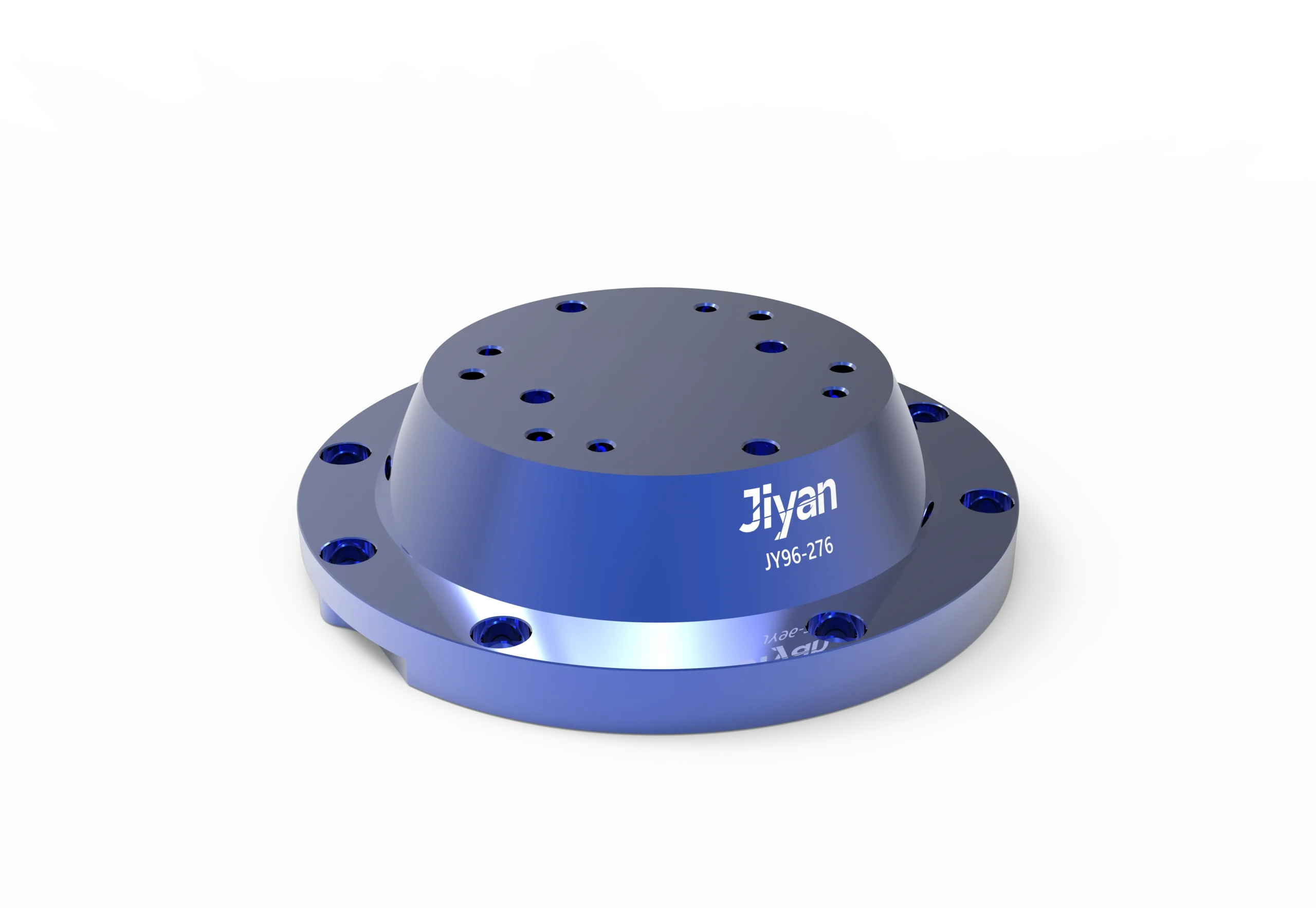
The TS96-276 zero-point base — the datum that makes every vise and pallet interchangeable across your cell.
Standardize on one pattern (96 mm is the common choice) and buy studs and sub-plates with the first base. See the zero-point guide for the full building-block list.
Mistake 5: tall fixtures that interfere and flex
Height is the enemy of rigidity and clearance. A tall custom tombstone flexes under cut and swings into the spindle at some rotary angle. Stay low: a thin zero-point base or dedicated sub-plate keeps the part near the table and out of the tool path.
If a simulation shows a near-miss at B/C extreme, drop the stack before you slow the feed. Rigidity is free throughput.
Mistake 6: mixing patterns and brands blindly
Two different zero-point patterns in one shop means fixtures that do not interchange — exactly the problem you bought the system to solve. Pick one pattern and one stud standard, then buy studs, sub-plates, and pallets to match. Brand mixing is fine if the pattern and seat geometry are compatible; verify before you commit a cell to it.
Mistake 7: no engagement confirmation for unattended runs
If you want lights-out, the control must know a stud is clamped before it spins. A base without a wired engagement sensor is a crash waiting to happen the first time a stud seats crooked. Confirm the sensor is in the loop, or keep a human in it.
A simple buying sequence
- Count changeovers. High mix → invest in self-centering + zero-point. Low mix → a good traditional vise is fine.
- Set your tolerance floor. Buy repeatability tighter than your print.
- Size clamp force to your roughest cut.
- Standardize the datum. One zero-point pattern, studs and sub-plates included.
- Stay low to keep rigidity and clearance.
- Wire engagement confirmation if you run unattended.
For the full CNC vise deep dive behind these buying rules, see the CNC vise guide.
FAQ
Do I need self-centering or traditional? Self-centering if your stock lacks a flat reference or you change diameters often; traditional if you run square bar in long batches. The comparison guide has the decision matrix.
Is zero-point worth it for one machine? Yes if you change fixtures often — it kills indication time even on a single table.
What is the one thing not to skip? Studs and sub-plates with the first base. Without them the base clamps nothing.
Conclusion
Good workholding buying is buying throughput, not hardware. Pay for repeatability, clamp force, and a shared zero-point datum; skip tall one-off fixtures and unconfirmed clamps. Do that and the vise pays for itself in reclaimed spindle time.
Ready to spec a set that fits your floor? Talk to JIYAN — we will match vises, bases, and studs to your machines and your mix.