
Pneumatic Workholding Built for Lights-Out Machining
JIYAN pneumatic workholding turns a manual bench into a repeatable cell. Also called an air vise on the shop floor, a pneumatic vise closes its jaws from shop air — so clamp force is consistent part to part and changeover takes seconds, not minutes. Pair a pneumatic self-centering vise with a pneumatic zero-point clamp and your fixture locates, clamps and releases without re-indicating. Every unit is machined, heat-treated, ground and CMM-inspected in-house.
Pneumatic workholding by family
Two families, one locating principle — every model is a real, shipped product. Click through for specs, jaw options and CAD.
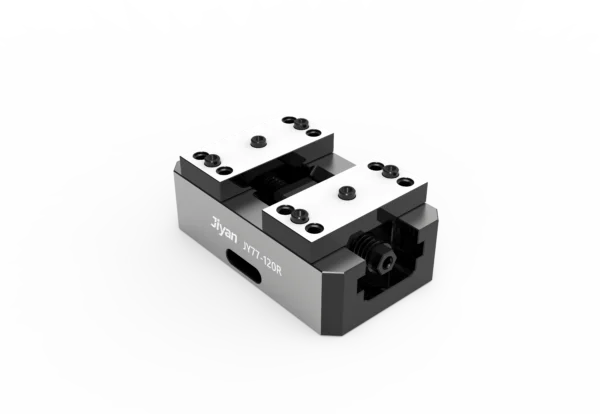
Standard Pneumatic Self-Centering Vise
General-purpose soft-jaw air vise for everyday pneumatic milling setups.
View product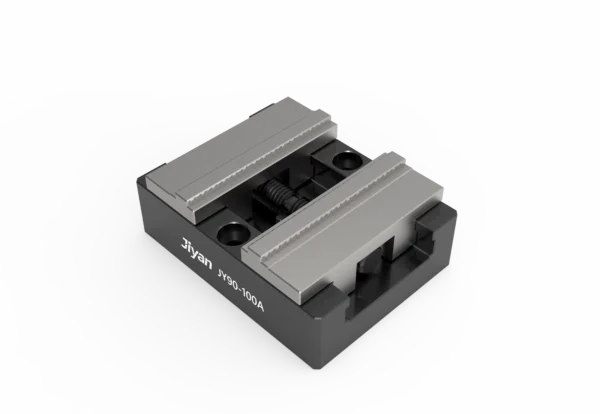
Low-Profile Pneumatic Self-Centering Vise
Low jaw keeps thin-wall parts clear of the cutter on the mill.
View product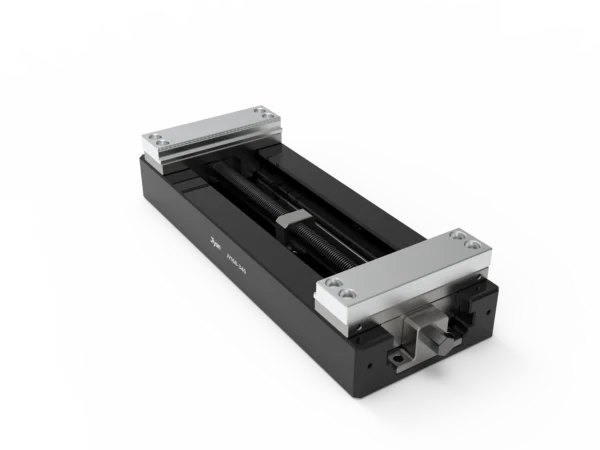
Extra-Heavy Pneumatic Self-Centering Vise
Soft/hard jaw for heavy roughing with high clamp force.
View product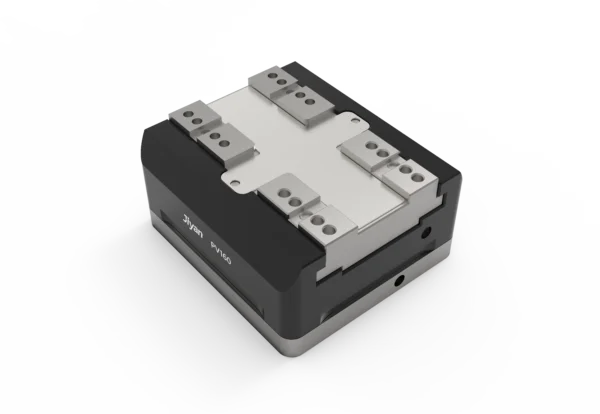
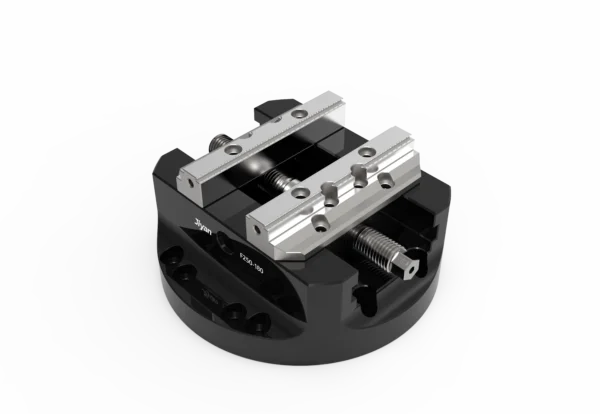
Flange-Type Pneumatic Self-Centering Vise
Flange body for bore and ring clamping on the mill.
View product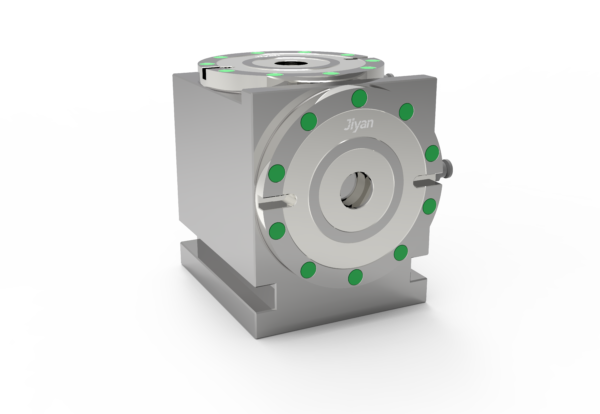
Pneumatic Zero-Point Clamp (Twin Cube)
Twin-cube zero-point for multi-station pallet changeover.
View product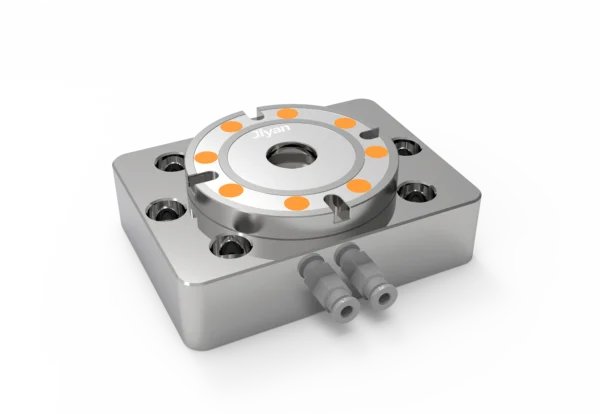
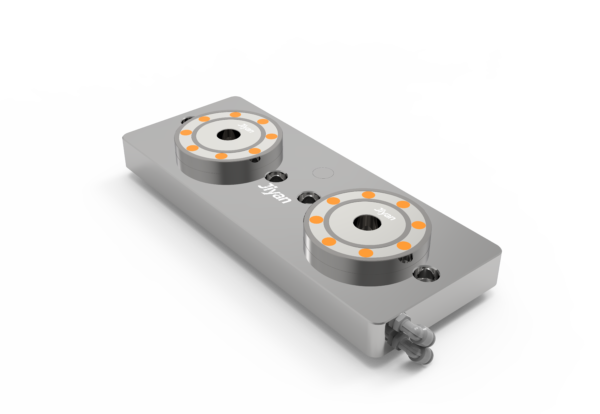
Pneumatic Zero-Point Clamp (2-Station)
2-station zero-point for fast, repeatable changeover.
View productPick the right pneumatic workholding
Self-centering vs zero-point
A pneumatic self-centering vise centers the part on its own axis — best when you feed raw stock and want symmetric clamping. A pneumatic zero-point clamp locates and holds a pre-machined pallet — best when you stage work off the machine and swap in seconds.
By clamp force
Finish passes need even, gentle force; heavy roughing needs boosted hold. Our pneumatic-hydraulic vise multiplies shop-air pressure for roughing without deforming the part.
By automation
Every pneumatic unit is built for robot-loaded cells: a clamp-confirm interlock wires into the CNC so the spindle won't start on an unclamped part. Manual today, lights-out tomorrow.
Related workholding
Pair your pneumatic system with the workholding that fits the job.
Pneumatic workholding questions
What is an air vise and how does it differ from a manual vise?
An air vise — the shop-floor name for a pneumatic vise — uses compressed shop air to close the jaws instead of a hand crank or hydraulic pump. Clamp force is set by regulator pressure, so it's identical part to part, and the jaw opens and closes in a fraction of a second. That consistency and speed is what makes lights-out and robot-loaded cells practical.
Can pneumatic vises be used for 5-axis machining?
Yes. Low-profile pneumatic self-centering vises sit low on the table and clear the toolpath, letting you reach four or five faces in one setup. Mount them on a zero-point base and the whole assembly swaps between machines without re-indicating.
What air pressure do JIYAN pneumatic vises need?
They run on standard shop air, typically around 0.4–0.6 MPa, with clamp force scaling to the regulated pressure. A clamp-confirm interlock signals the CNC that the part is seated before the spindle starts — built in for automated cells.
How do pneumatic zero-point clamps help lights-out production?
A pneumatic zero-point clamp combines locating and clamping on a single pallet face. You stage raw or partially finished work off the machine, then drop the pallet onto the receiver and it locates to repeatability in one motion — no indicating, no shimming, no downtime between runs.
How fast can I get a quote for pneumatic workholding?
Send your part drawing and process constraints. Our engineers return a fixture direction and quote, typically within 24 hours.
Build your pneumatic cell
Send us your drawing and process constraints — fixture direction and quote within 24 hours.
Request a Quote