
JIYAN self-centering CNC vises are designed to position workpieces consistently from the center, helping machinists reduce manual alignment steps and support repeatable machining setups. Choose a vise based on workpiece dimensions, required clamping force, machining access, jaw configuration, and the number of operations in your production cycle.
What Is a Self-Centering CNC Vise?
A self-centering vise uses a synchronized jaw mechanism to move opposing jaws toward or away from the centerline. When the workpiece is clamped correctly, this motion helps keep the part centered relative to the vise. Self-centering vises are commonly used for repeatable milling setups, batch machining, and applications where consistent positioning can reduce setup variation.
Actual positioning accuracy depends on the vise model, machine condition, workpiece geometry, jaw condition, and setup procedure. Verify the specifications of the selected model for your application.
Key Benefits of Self-Centering Vises
- Centered clamping: Synchronized jaw movement helps position suitable workpieces around the vise centerline.
- Repeatable setups: A consistent clamping method can help reduce repeated manual alignment during batch production.
- Efficient multi-part machining: Suitable configurations can support repeat jobs and standardized workholding processes.
- Flexible jaw options: Select compatible jaw styles and contact surfaces for the material and geometry being machined.
- Automation readiness: With the right machine interface and process design, self-centering vises can be incorporated into repeatable production workflows.
How to Choose the Right Self-Centering CNC Vise
1. Check workpiece size and jaw opening
Confirm the maximum workpiece width, required jaw opening, part height, and available machining envelope. The vise should securely accommodate the part without obstructing tool access.
2. Match clamping force to the machining process
Consider cutting forces, material, tool engagement, and the rigidity of the setup. Excessive clamping force can deform thin-walled parts, while insufficient force can allow movement. Use the manufacturer’s specifications and validate the setup before production.
3. Choose suitable jaws and contact surfaces
Jaw material, profile, and contact area affect grip and workpiece protection. Soft jaws or application-specific jaw profiles may be appropriate for delicate, irregular, or precision-finished parts when supported by the vise design.
4. Consider the number of axes and tool access
For 3-axis milling, prioritize rigidity and access to the required faces. For 4-axis or 5-axis machining, evaluate clearance, jaw height, fixture envelope, and potential tool or spindle interference before selecting a configuration.
5. Plan for production volume and automation
For repeated batches, evaluate loading consistency, chip management, cleaning access, and how the vise fits into your setup procedure. Automated applications also require compatible machine interfaces, safe clamping verification, and a validated loading sequence.
Self-Centering Vise vs. Traditional CNC Vise
| Consideration | Self-centering vise | Traditional vise |
|---|---|---|
| Jaw movement | Opposing jaws move in a synchronized manner | Typically one jaw moves toward a fixed jaw |
| Positioning workflow | Can reduce repeated centering steps for suitable parts | May require additional alignment depending on the operation |
| Typical fit | Repeat jobs, symmetric parts, and centered setups | Broad range of general-purpose clamping tasks |
| Selection priority | Centering requirements, jaw range, and process repeatability | Workpiece geometry, clamping needs, and machine access |
Neither design is best for every job. Choose based on part geometry, machining strategy, setup requirements, and the manufacturer’s verified specifications. Read our guide to self-centering vs. traditional CNC vises for a more detailed comparison.
Self-Centering Vises for 5-Axis Machining
Self-centering vises can be useful in multi-axis machining when the workpiece needs a consistent center reference. Before using one in a 5-axis setup, check jaw height, tool reach, spindle clearance, fixture rigidity, and access to the required faces. For broader fixture planning, explore our 5-axis machining workholding solutions.
Explore JIYAN Vise Series
Compare the available JIYAN vise series and select a configuration based on workpiece dimensions, jaw options, and machining requirements:
Series availability and specifications may vary. Confirm the exact model, dimensions, clamping method, and compatible accessories before ordering.
Frequently Asked Questions
What is the main advantage of a self-centering vise?
Its synchronized jaws help center suitable workpieces, which can simplify alignment and improve consistency across repeated setups.
Is a self-centering vise suitable for 5-axis CNC machining?
It can be suitable when the vise geometry, jaw height, rigidity, and tool clearance match the machining operation. Always check the complete setup for interference.
How do I choose between a self-centering vise and a traditional vise?
Consider whether centered positioning is important, how often the job repeats, the workpiece shape, required clamping force, and access for cutting tools. A traditional vise may be more suitable for some irregular or off-center clamping tasks.
What information should I provide when requesting a vise recommendation?
Share the workpiece dimensions and material, machine type, machining axes, required jaw opening, production volume, and any drawing or setup photos available. This helps the team assess a suitable configuration.
Request a Self-Centering Vise Recommendation
Need help selecting a self-centering CNC vise for your application? Contact JIYAN with your workpiece details and machining requirements to discuss a suitable workholding solution.
Related products & guides
- self centering vise vs traditional CNC vise
- how a self centering vise works
- CNC vise product range
- mechanical vs pneumatic vs hydraulic self centering vise
- self centering vise for 5 axis machining
- self centering vise buying guide
- JY77 pneumatic self centering vise
- JY54 self centering vise series
- self centering vise mechanism explained
- pneumatic zero point clamping system
Self-Centering Vises Engineered for Milling
A self-centering vise grips the part from both sides at once, so the workpiece always lands on the same centerline — no dial-indicating, no shimming, no walking off-center. That is why a self centering vise for milling is the fastest way to load raw stock and hold tight repeatability. JIYAN builds self-centering vises in pneumatic and manual versions, all machined, heat-treated, ground and CMM-inspected in-house.
Self-centering vises by size and duty
Every model is a real, shipped product. Click through for specs, jaw options and CAD.
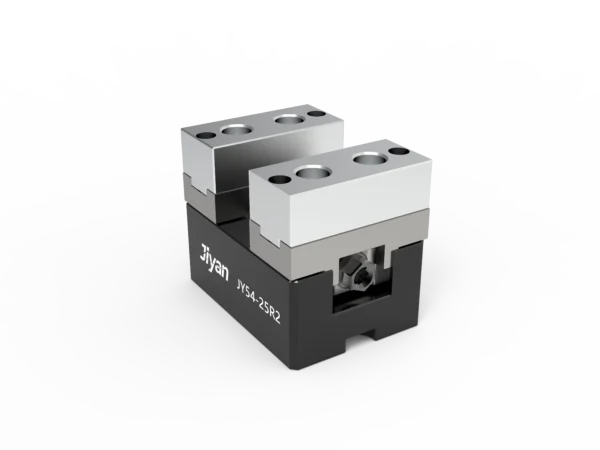
Small Precision Self-Centering Vise
Aluminum soft jaw for delicate small parts and electronics milling.
View product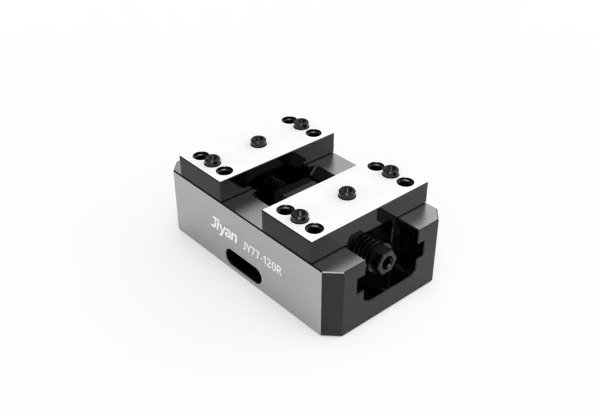
Standard Self-Centering Vise
General-purpose soft-jaw vise for everyday milling setups.
View product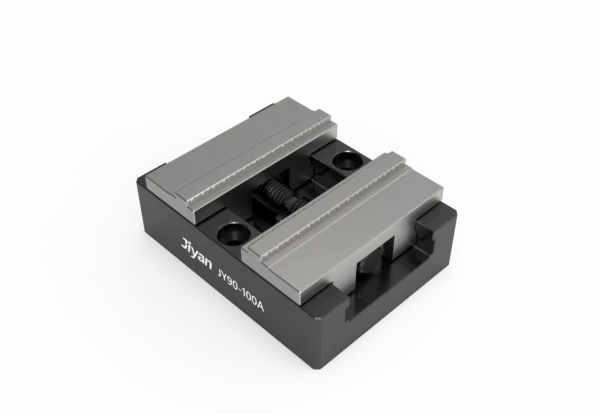
Low-Profile Self-Centering Vise
Low jaw keeps thin-wall parts clear of the cutter on the mill.
View product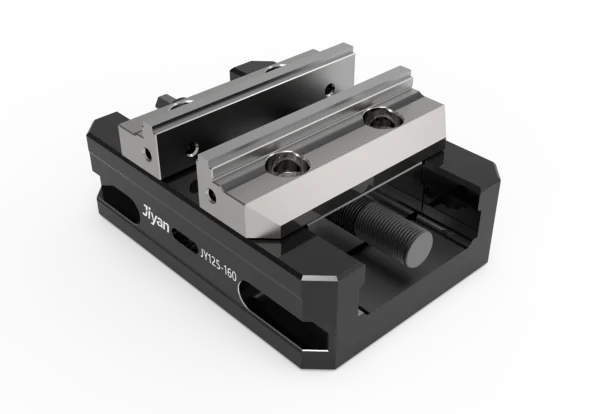
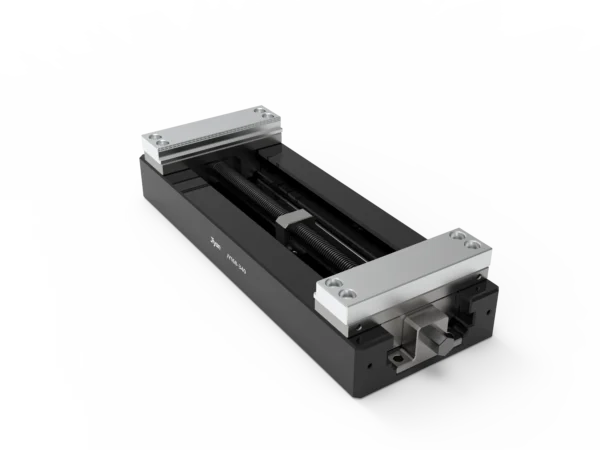
Extra-Heavy Self-Centering Vise
Soft/hard jaw for heavy roughing with high clamp force.
View product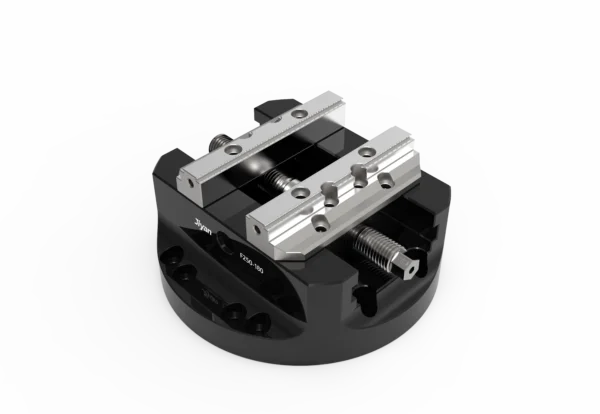
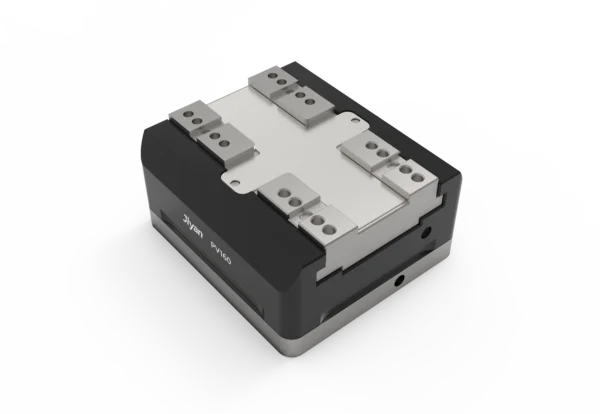
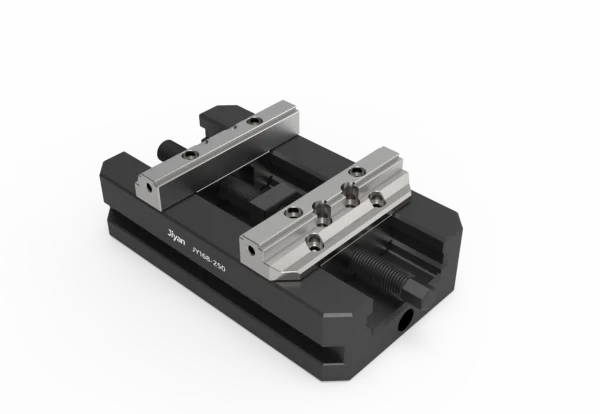
Heavy-Duty Self-Centering Vise (Hard Jaw)
Hard-jaw variant for high-volume roughing and tough alloys.
View productPick the right self-centering vise
By part size
Small delicate parts → the JY54 aluminum-jaw vise. Mid-size work → JY77 / JY90. Large or stiff parts → JY125 / JY168 heavy-duty bodies with hard jaws.
By jaw type
Soft jaws protect finished surfaces; hard jaws hold tough alloys and rough stock. Low and high jaws change how much of the part clears the cutter — pick for your toolpath.
By actuation
Pneumatic self-centering vises close from shop air for robot-loaded cells. Manual versions give the same centering for lower-volume or prototype work.
Related workholding
Pair your self-centering vise with the system that fits the job.
Self-centering vise questions
What is a self-centering vise and why use it for milling?
A self-centering vise moves both jaws inward by equal amounts, so the workpiece is always centered on the vise axis no matter its width. For milling that means you load raw stock, close the vise, and cut — without dial-indicating or shimming to find center. It is the fastest way to get repeatable setups on a mill.
How accurate is the centering repeatability?
JIYAN self-centering vises hold consistent centering across thousands of cycles, within roughly ±0.005 mm. Because the jaws are ground and guided, the part returns to the same position every time you close the vise — critical for multi-up and second-op work.
Can self-centering vises be used for 5-axis machining?
Yes. Low-profile self-centering vises sit low on the table and clear the toolpath, letting you reach four or five faces in one setup. Mount them on a zero-point base and the whole assembly swaps between machines without re-indicating.
Should I choose a pneumatic or manual self-centering vise?
Choose pneumatic when the cell is robot-loaded or you want consistent, regulator-set clamp force part to part. Choose manual for lower-volume, prototype or bench work where air is not wired in — you still get the same centering principle.
How fast can I get a quote for a self-centering vise?
Send your part drawing and process constraints. Our engineers return a fixture direction and quote, typically within 24 hours.
Specify your self-centering vise
Send us your drawing and process constraints — fixture direction and quote within 24 hours.
Request a Quote